Why Are White Plastic Cutting Boards Used in Commercial Kitchens?
Why Are White Plastic Cutting Boards Used in Commercial Kitchens?
Walk into almost any restaurant kitchen, hotel food-preparation area, catering facility, butcher shop, or food-processing plant and you'll likely find a white plastic cutting board. While consumers often choose cutting boards based on appearance, commercial kitchens prioritize food safety, durability, sanitation, and regulatory compliance.
So why are white plastic cutting boards so common in professional food environments?
The answer lies in their food-safe materials, easy cleaning properties, HACCP compatibility, and long-term durability. In this guide, we'll explain everything buyers need to know about white plastic cutting boards, including materials, hygiene standards, advantages, disadvantages, and how to choose the best board for commercial use.

What Is a White Plastic Cutting Board?
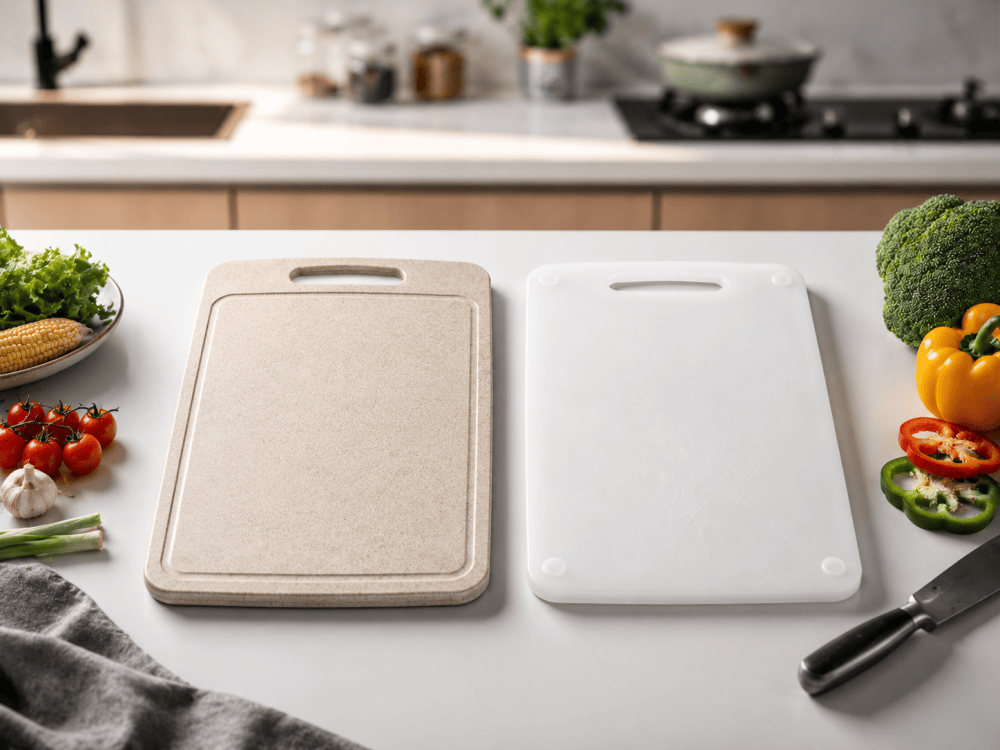
A white plastic cutting board is a food-preparation surface manufactured from food-grade plastic materials, most commonly HDPE (High-Density Polyethylene) or PP (Polypropylene).
Unlike wooden cutting boards, white plastic cutting boards are non-porous, moisture-resistant, and highly suitable for environments where sanitation is critical.
The white color also makes contamination easier to identify because food particles, stains, and residues are more visible than on darker surfaces.
Many commercial kitchens use white cutting boards specifically for bakery products, dairy products, cooked foods, and general-purpose food preparation because cleanliness can be visually monitored more easily.
What Material Is Used for White Plastic Cutting Boards?
HDPE (High-Density Polyethylene)
HDPE is the most common white plastic cutting board material used in restaurants and food-processing facilities.
- FDA food-contact compliant
- Excellent impact resistance
- Low moisture absorption
- Non-toxic and odor resistant
- Knife-friendly surface
- Easy to sanitize
HDPE boards are widely used because they balance durability, hygiene, and affordability.
PP (Polypropylene)
Another popular white plastic cutting board material is polypropylene (PP).
PP cutting boards offer:
- Higher heat resistance
- Excellent chemical resistance
- Lightweight construction
- Recyclable material
- Food-grade safety compliance
Many modern PP cutting boards are designed for both home kitchens and commercial food-service environments.
Why Commercial Kitchens Prefer White Plastic Cutting Boards
1. Superior Food Safety
Food safety is the primary reason commercial kitchens choose white plastic cutting boards.
Unlike porous materials, food-grade plastic resists moisture penetration and reduces the likelihood of bacteria becoming trapped deep inside the board.
This helps restaurants comply with food safety requirements and sanitation procedures.
2. Easier Cleaning and Sanitizing
White plastic cutting boards can be washed using commercial detergents, chlorine sanitizers, quaternary ammonium sanitizers, or dishwasher systems.
The smooth surface allows food debris to be removed quickly.
3. Visual Inspection of Cleanliness
White surfaces make food residue highly visible.
Kitchen staff can immediately identify:
- Food particles
- Grease residue
- Stains
- Mold growth
- Improper cleaning
This visual advantage supports stricter sanitation management.
4. Cost-Effective for High-Volume Use
Commercial kitchens often replace cutting boards regularly to maintain hygiene standards.
Plastic boards provide an excellent balance between cost and performance compared with premium hardwood alternatives.
White Plastic Cutting Board vs Wooden Cutting Board
| Feature | White Plastic Board | Wood Cutting Board |
|---|---|---|
| Food Safety | Excellent | Good |
| Commercial Use | Highly Recommended | Limited |
| Dishwasher Safe | Many Models Yes | No |
| Maintenance | Low | Higher |
| Cost | Affordable | Higher |
| Moisture Resistance | Excellent | Moderate |
Are White Plastic Cutting Boards Safe?
One of the most common questions buyers ask is: Are white plastic cutting boards safe?
The short answer is yes—provided they are manufactured from certified food-grade materials such as HDPE (High-Density Polyethylene) or PP (Polypropylene).
Modern commercial cutting boards are specifically designed for direct food contact and are widely used throughout restaurants, hospitals, school cafeterias, bakeries, food processing facilities, and commercial catering operations worldwide.
Food-grade white plastic cutting boards are typically manufactured to comply with regulations such as:
- FDA Food Contact Requirements (United States)
- LFGB Standards (Germany)
- EU Food Contact Regulations
- NSF Commercial Food Equipment Standards
- BPA-Free Requirements
Commercial kitchens generally choose white plastic cutting boards because they can be cleaned, sanitized, inspected, and replaced more easily than many alternative cutting board materials.
Do White Plastic Cutting Boards Harbor Bacteria?
This topic has been debated for years.
Many consumers assume that plastic cutting boards automatically harbor more bacteria than wood, but scientific studies suggest that proper cleaning practices are often more important than material alone.
The primary concern is not the plastic itself but the knife grooves that develop over time.
As cutting boards age, repeated knife use creates microscopic scratches where food particles may accumulate.
To minimize bacterial growth:
- Wash boards immediately after use
- Sanitize regularly
- Avoid leaving raw meat residue on the surface
- Replace heavily damaged boards
- Use separate boards for different food categories
In commercial kitchens, cutting boards are considered consumable items and are routinely replaced once excessive wear becomes visible.
The HACCP Color-Coded Cutting Board System
Many restaurants use color-coded cutting boards as part of their HACCP (Hazard Analysis and Critical Control Points) food safety system.
Color coding helps reduce cross-contamination risks by assigning specific boards to specific food categories.
| Color | Typical Food Category |
|---|---|
| White | Bakery Products / Dairy / General Use |
| Red | Raw Meat |
| Yellow | Raw Poultry |
| Blue | Raw Seafood |
| Green | Fruits & Vegetables |
| Brown | Cooked Meats |
White plastic cutting boards remain one of the most versatile options because they are commonly used for baked goods, dairy products, prepared foods, and general food preparation tasks.
Why White Color Matters in Food Preparation
The color of a cutting board is not merely aesthetic.
White cutting boards provide practical advantages that directly support food safety management.
Enhanced Visibility
Food debris, stains, and residue are easier to identify on white surfaces than on dark-colored boards.
Improved Sanitation Monitoring
Kitchen supervisors can visually inspect cleanliness more efficiently.
Professional Appearance
White boards project a clean and sanitary appearance that aligns with commercial kitchen standards.
Contamination Detection
Mold spots, grease buildup, and food residue are more noticeable.
Large White Plastic Cutting Boards: How to Choose the Right Size
Large white plastic cutting boards are especially popular in restaurants, butcher shops, and food processing facilities.
The correct size depends on your application.
| Application | Recommended Size |
|---|---|
| Home Kitchen | 30 × 20 cm to 40 × 30 cm |
| Bakery | 45 × 30 cm to 60 × 40 cm |
| Restaurant Prep Station | 60 × 45 cm |
| Commercial Processing | 75 × 50 cm or larger |
For high-volume food preparation, larger cutting surfaces improve efficiency and reduce workflow interruptions.
How Thick Should a White Plastic Cutting Board Be?
Thickness is one of the most overlooked purchasing factors.
| Thickness | Best Use |
|---|---|
| 8-10 mm | Light Household Use |
| 12-15 mm | Daily Home Cooking |
| 20 mm | Restaurant Kitchens |
| 25 mm+ | Heavy Commercial Processing |
Thicker boards offer:
- Longer service life
- Greater stability
- Reduced warping risk
- Higher impact resistance
- Improved durability under commercial use
HDPE vs PP: Which White Plastic Cutting Board Material Is Better?
Buyers often compare HDPE and PP cutting boards.
| Property | HDPE | PP |
|---|---|---|
| Food Safety | Excellent | Excellent |
| Impact Resistance | Excellent | Very Good |
| Heat Resistance | Good | Excellent |
| Flexibility | Higher | Moderate |
| Commercial Popularity | Very High | High |
| Cost | Competitive | Competitive |
HDPE remains the most widely used commercial cutting board material because of its balance of durability, hygiene, and affordability.
PP is increasingly popular for modern food preparation applications requiring enhanced heat resistance.
Can White Plastic Cutting Boards Go in the Dishwasher?
Many food-grade plastic cutting boards are dishwasher safe.
However, users should always verify manufacturer instructions.
Repeated exposure to extremely high dishwasher temperatures may accelerate wear over time.
Commercial kitchens often use:
- High-temperature dishwashers
- Chemical sanitizing systems
- Steam sanitation
- Food-safe disinfectants
These cleaning methods help maintain hygiene standards while extending cutting board lifespan.
How to Properly Clean a White Plastic Cutting Board
Daily Cleaning
- Remove food debris immediately.
- Wash with warm water and detergent.
- Scrub knife grooves thoroughly.
- Rinse completely.
- Air dry vertically.
Deep Sanitizing
For commercial environments:
- Food-safe bleach solution
- Quaternary ammonium sanitizer
- Commercial dishwasher sanitation
- Food-grade hydrogen peroxide sanitizers
Regular sanitation significantly reduces contamination risks.
When Should You Replace a White Plastic Cutting Board?
No cutting board lasts forever.
Replace your board if you notice:
- Deep knife grooves
- Persistent stains
- Warping
- Cracks
- Persistent odors
- Surface deterioration
Commercial food safety audits often require replacement of excessively worn cutting boards.
Food Safety Standards: FDA, NSF, and LFGB Requirements
For commercial kitchens, food processors, and kitchenware importers, choosing a cutting board is not simply about size or price. Regulatory compliance is often one of the most important purchasing factors.
High-quality white plastic cutting boards are typically manufactured to meet internationally recognized food-contact standards.
FDA Food Contact Compliance
In the United States, cutting boards used for food preparation should be manufactured from FDA-compliant food-contact materials. FDA regulations help ensure that plastic materials do not release harmful substances into food during normal use.
NSF Certification
NSF-certified cutting boards are commonly found in restaurants, hotels, hospitals, and institutional kitchens. NSF standards focus on hygiene, cleanability, durability, and food safety performance.
LFGB Certification
LFGB is one of the most stringent food-contact regulations in Europe. Products that meet LFGB requirements undergo rigorous testing to verify food safety and material stability.
If you sell kitchenware in North America or Europe, choosing FDA- and LFGB-compliant cutting boards can help reduce regulatory risks and improve customer confidence.
Are White Plastic Cutting Boards Environmentally Friendly?
Sustainability has become an important purchasing factor for consumers and food-service operators.
While plastic cutting boards are often criticized for their environmental impact, modern food-grade plastics such as HDPE and PP are recyclable and can have long service lives when properly maintained.
Compared with disposable kitchen products, a durable plastic cutting board may remain in service for years before replacement is required.
Advantages from a Sustainability Perspective
- Long service life
- Recyclable materials
- Reduced food waste through improved sanitation
- Lower replacement frequency compared with low-quality alternatives
Best Practices
- Choose durable food-grade materials
- Replace boards only when necessary
- Recycle worn boards where facilities exist
- Purchase from responsible manufacturers
How White Plastic Cutting Boards Are Manufactured
Understanding the manufacturing process helps buyers evaluate product quality.
Raw Material Selection
Production begins with food-grade HDPE or PP resin. High-quality manufacturers use virgin materials to ensure consistency, safety, and durability.
Compression or Injection Molding
The plastic is processed into sheets or molded into specific board shapes using industrial equipment.
Precision Cutting
Large sheets are cut into standard or custom dimensions based on customer requirements.
Surface Finishing
Edges are smoothed, corners rounded, and surfaces inspected to ensure safe handling.
Quality Inspection
Finished boards undergo checks for:
- Dimensions
- Thickness
- Flatness
- Color consistency
- Food-contact compliance
Professional manufacturing ensures each cutting board performs consistently in commercial environments.
OEM & Private Label White Plastic Cutting Boards
As demand for food-safe kitchen products continues to grow, many distributors, retailers, Amazon sellers, and kitchenware brands are launching their own private-label cutting board collections.
OEM manufacturing allows businesses to customize products according to market requirements while building brand recognition.
At Kitlucy, we support OEM and customized kitchenware solutions for global distributors and retailers.
Available Customization Options
- Custom sizes and thicknesses
- Custom colors
- Logo engraving or printing
- Retail packaging design
- Barcode and labeling services
- Private-label branding
We also offer a wide range of PP cutting boards designed for food preparation, retail distribution, and commercial kitchen use.
Commercial Kitchen Purchasing Checklist
Before purchasing a white plastic cutting board, consider the following factors:
| Factor | What to Check |
|---|---|
| Material | Food-grade HDPE or PP |
| Certification | FDA, LFGB, NSF |
| Thickness | Appropriate for intended use |
| Size | Matches workspace requirements |
| Durability | Impact and knife resistance |
| Cleaning | Dishwasher or sanitizer compatibility |
| Supplier | Reliable manufacturer with quality control |
Purchasing decisions based on these criteria typically result in longer product life and improved food safety performance.
Frequently Asked Questions (FAQ)
What material is a white plastic cutting board made from?
Most white plastic cutting boards are manufactured from HDPE (High-Density Polyethylene) or PP (Polypropylene), both of which are food-safe and widely used in commercial kitchens.
Why do restaurants use white cutting boards?
White cutting boards make food residue easier to see, support sanitation procedures, and are commonly used within HACCP food safety systems.
Are white plastic cutting boards food safe?
Yes. Certified food-grade plastic cutting boards are designed specifically for direct food contact and are widely used throughout the food-service industry.
Which is better: HDPE or PP cutting boards?
Both materials are excellent choices. HDPE offers superior impact resistance, while PP provides better heat resistance.
Can white plastic cutting boards go in the dishwasher?
Many models are dishwasher safe, although users should always follow manufacturer recommendations.
How often should a commercial cutting board be replaced?
Replacement depends on wear levels. Deep grooves, cracks, warping, or persistent staining are signs that a board should be replaced.
Do plastic cutting boards dull knives?
Food-grade HDPE and PP cutting boards are generally considered knife-friendly and cause less blade wear than harder materials such as glass, ceramic, stainless steel, or titanium.
What thickness is best for a commercial cutting board?
Most commercial kitchens prefer boards between 15 mm and 25 mm thick because they offer excellent durability and stability.
Can white cutting boards be recycled?
Many HDPE and PP cutting boards are recyclable, depending on local recycling programs.
Are white plastic cutting boards better than wood?
For commercial food-service operations, plastic boards are often preferred because they are easier to sanitize and maintain.
Final Verdict: Why White Plastic Cutting Boards Remain the Commercial Standard
White plastic cutting boards continue to dominate commercial kitchens because they combine food safety, durability, affordability, and ease of sanitation in a single solution.
Whether manufactured from HDPE or PP, high-quality white cutting boards support HACCP programs, simplify cleaning procedures, and help food-service businesses maintain consistent hygiene standards.
For restaurants, bakeries, food processors, catering companies, and kitchenware distributors, white plastic cutting boards remain one of the most practical and cost-effective food-preparation tools available today.
Looking for High-Quality White Plastic Cutting Boards?
Kitlucy manufactures food-grade PP and plastic cutting boards for global distributors, retailers, restaurants, and private-label brands. We provide OEM customization, custom sizing, logo branding, packaging solutions, and reliable bulk production support.
Explore our PP Cutting Board Collection, learn more about our OEM & Customized Services, or Contact Us to discuss your next kitchenware project.
Related Blogs