

Are Wood Fiber Cutting Boards Dishwasher Safe? A Complete Care Guide
Wood fiber cutting boards have become a popular alternative to traditional wooden and plastic cutting boards. They combine a natural-looking appearance with a dense, durable surface, and some products are designed to withstand dishwasher cleaning.
But are all wood fiber cutting boards dishwasher safe? Not necessarily. Their cleaning requirements depend on the material composition, manufacturing process, construction, and product specifications.
In this guide, we explain how wood fiber cutting boards are made, whether they can go in the dishwasher, how to clean and maintain them, and what buyers should check when choosing a high-quality cutting board.
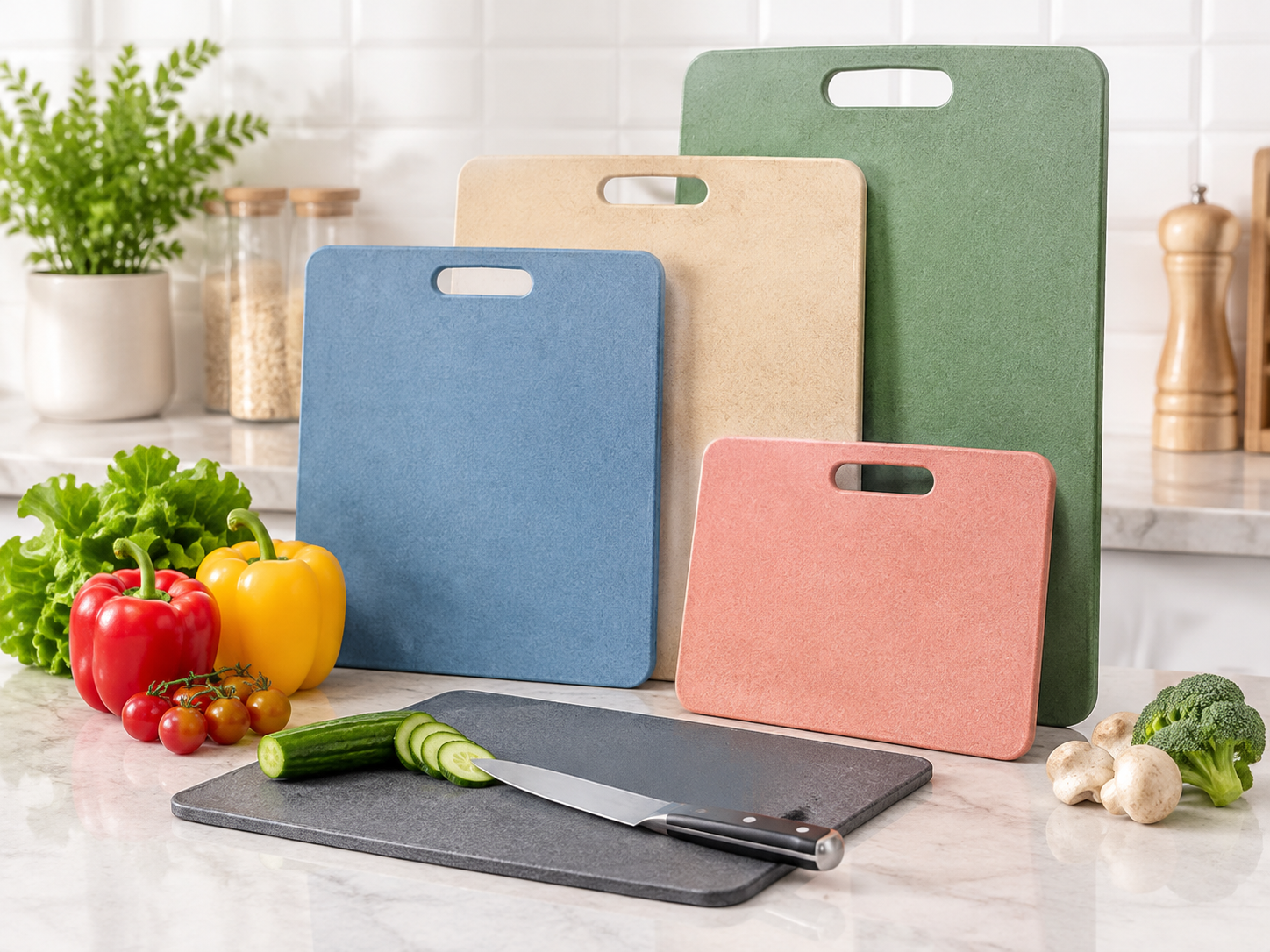
Yes, many wood fiber composite cutting boards are dishwasher safe, but not all products have the same cleaning requirements.
Some compressed wood fiber boards are manufactured with resin-bonded fibers and are specifically designed for dishwasher cleaning. However, other fiber-based boards may have different constructions, coatings, or attached components that limit dishwasher use.
Always check the manufacturer's care instructions before placing a wood fiber cutting board in the dishwasher. If dishwasher use is not confirmed, hand washing is the safer option.
What Is a Wood Fiber Cutting Board?
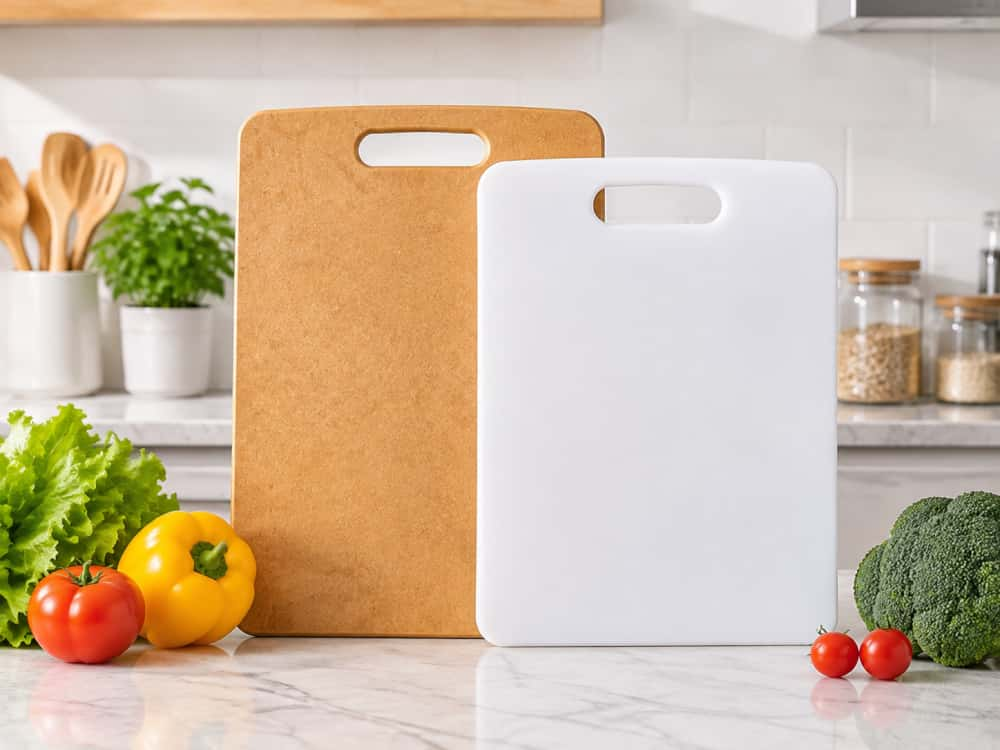
A wood fiber cutting board is a food preparation surface made from processed plant-based fibers. One common type is a paper or wood fiber composite board, manufactured by combining layers of fiber material with resin and applying heat and pressure.
During production, the fibers are bonded into a dense, solid sheet. The resulting material can have a smooth surface, relatively low porosity, and a thinner profile than many traditional wooden cutting boards.
Depending on the manufacturer and product design, wood fiber boards may offer several useful characteristics:
- A relatively dense and smooth cutting surface
- A lightweight, slim construction
- Resistance to everyday moisture exposure
- Easy cleaning and maintenance
- A natural wood-like appearance
- Compatibility with different kitchen and food preparation applications
However, not every product marketed as a wood fiber cutting board uses the same composition. Fiber type, resin system, thickness, surface treatment, and additional components can all affect product performance.
Why Are Some Wood Fiber Cutting Boards Dishwasher Safe?
The dishwasher suitability of a wood fiber cutting board mainly depends on how its material is manufactured and how the finished product is constructed.
1. Compressed Fiber Construction
Many dishwasher-safe wood fiber boards are made by bonding multiple layers of fiber-based material under controlled heat and pressure.
In paper composite manufacturing, for example, sheets of paper are impregnated with thermosetting resin, stacked, and compressed. The resin cures during processing and helps form a dense, rigid composite sheet.
This construction differs from a traditional solid wood board, which has a natural grain structure and can absorb moisture through its surface and edges.
2. A Dense Surface Helps Limit Moisture Absorption
A properly manufactured composite surface can be less porous than many traditional wooden cutting boards. This helps reduce the amount of water absorbed during ordinary cleaning.
Lower moisture absorption can make a composite board more suitable for repeated washing, but it does not automatically mean that every board can withstand dishwasher temperatures and cleaning cycles.
3. Product Design Also Matters
Even when the main board material is dishwasher safe, other product components may affect the cleaning instructions.
For example, some cutting boards include:
- Silicone anti-slip corners or feet
- Attached rubber components
- Decorative surface treatments
- Printed designs or additional coatings
- Bonded or assembled sections
These components may have different heat and detergent resistance from the main board. Buyers should evaluate the complete finished product rather than only the fiber material.
How to Clean a Wood Fiber Cutting Board
The correct cleaning method depends on the manufacturer's instructions. If the product is specifically labeled dishwasher safe, it can generally be cleaned using the recommended dishwasher procedure. If not, hand washing is the more cautious approach.
Method 1: Cleaning in a Dishwasher
For a wood fiber cutting board that is confirmed dishwasher safe, follow these steps:
- Remove food residue: Scrape off leftover food and rinse away loose debris before loading the board.
- Position the board securely: Place it where it will not fall, bend, or interfere with the dishwasher spray arms.
- Follow the product instructions: Use the dishwasher cycle and detergent conditions recommended by the manufacturer.
- Allow it to dry: Remove the board after cleaning and let it dry completely before storage.
- Inspect the surface: Check for unusual changes, cracks, delamination, or damage after repeated cleaning.
Do not assume that a board is dishwasher safe simply because it looks like a compressed fiber product. Confirm the manufacturer's instructions first.
Method 2: Hand Washing with Soap and Water
Hand washing is suitable for most cutting boards when the manufacturer does not specify dishwasher compatibility.
- Remove loose food particles from the cutting surface.
- Wash both sides with warm water and mild dish soap.
- Use a soft sponge or non-abrasive cleaning brush.
- Rinse away all soap residue.
- Dry the board with a clean towel or allow it to air-dry completely.
- Store it in a dry, ventilated location.
Cleaning both sides helps keep the board in good condition and avoids leaving food residue on the underside.
How to Maintain a Wood Fiber Cutting Board
Although some wood fiber composite boards require less maintenance than traditional wooden boards, regular care is still important.
1. Avoid Excessive Heat
Some wood fiber boards are designed to tolerate elevated temperatures and may also be used as trivets within a specified temperature limit. However, heat resistance varies by product.
Do not place a cutting board in an oven, microwave, or directly over a flame unless the manufacturer explicitly allows that use. Dishwasher-safe does not mean oven-safe or heatproof under every condition.
2. Avoid Harsh Cleaning Tools
Steel wool, aggressive abrasive pads, and harsh chemicals may damage the surface or affect certain finishes. Use cleaning tools and products appropriate for the manufacturer's care instructions.
3. Dry Before Storage
After washing, make sure the board is dry before putting it away. Upright storage can improve airflow around the board and reduce prolonged moisture exposure.
4. Use Both Sides When the Design Allows
Many wood fiber cutting boards are reversible. Using both sides can distribute normal cutting marks across the board, provided both surfaces are designed for food preparation.
5. Replace Boards That Are Excessively Worn
Cut marks are normal during use. However, if a board develops deep grooves, cracks, delamination, or damaged areas that are difficult to clean, it should be evaluated for replacement.
Wood Fiber vs. Traditional Wood vs. Plastic Cutting Boards
Different cutting board materials offer different combinations of cleaning convenience, knife interaction, durability, and maintenance. The following comparison provides a general overview.
| Feature | Wood Fiber Composite | Traditional Wood | Plastic |
|---|---|---|---|
| Material structure | Processed fibers bonded into a composite | Natural wood grain | Polymer-based material |
| Dishwasher suitability | Some products are dishwasher safe | Generally not recommended | Depends on polymer, thickness, and design |
| Moisture behavior | Depends on density and construction | Can absorb moisture | Generally low moisture absorption |
| Weight | Generally lightweight | Varies by wood species and thickness | Varies by material and thickness |
| Knife interaction | Depends on surface hardness and construction | Depends on wood species and grain | Depends on polymer hardness and surface condition |
| Maintenance | Usually relatively simple | Requires careful drying and maintenance | Generally easy to clean |
| Common applications | Everyday food preparation and serving | Food preparation and presentation | Home and commercial food preparation |
Wood Fiber vs. Traditional Wood
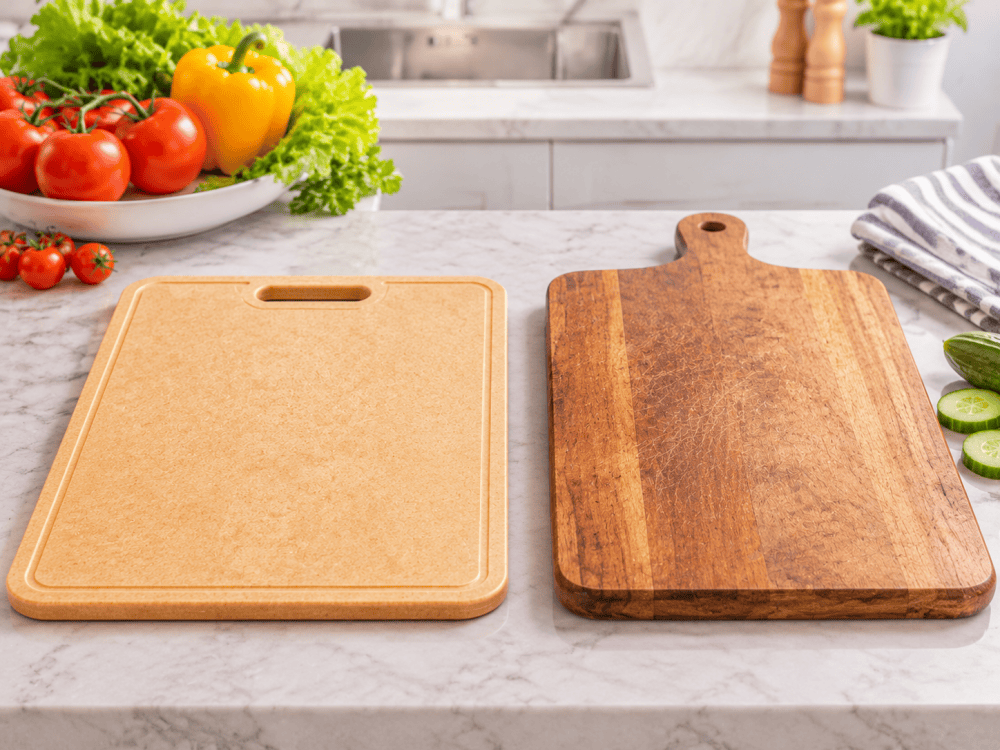
Traditional wooden cutting boards are made from solid wood or wood laminations. They offer a natural appearance and are available in different grain patterns and construction styles.
Wood fiber composite boards are manufactured through a different process. Their compressed structure can make certain products thinner, denser, and easier to clean than conventional wooden boards.
The main distinction is that dishwasher suitability should be evaluated based on the actual construction and manufacturer's instructions, not simply the presence of wood-based material.
Wood Fiber vs. Plastic
Plastic cutting boards are commonly made from materials such as polyethylene or polypropylene. They are available in different colors, thicknesses, and sizes and are widely used in household and commercial kitchens.
Some plastic boards can be washed in dishwashers, but heat exposure may cause certain designs to warp. Wood fiber composite boards offer a different surface feel and appearance, while plastic boards often provide greater flexibility in color coding and product design.
Neither material is automatically better for every application. Buyers should consider cleaning requirements, product construction, knife interaction, and intended use.
Are Wood Fiber Cutting Boards More Hygienic?
Wood fiber cutting boards are often described as non-porous or easy to clean, but hygiene depends on the actual material surface, product condition, and cleaning procedure.
A dense, smooth composite surface can help limit the penetration of water and food residues. However, no cutting board should be treated as self-sanitizing or automatically free from harmful microorganisms.
To maintain good food hygiene:
- Wash the board after each food preparation task.
- Use appropriate cleaning procedures for raw meat, poultry, seafood, vegetables, and ready-to-eat foods.
- Use separate boards or a suitable food-safety system to reduce cross-contamination risks.
- Sanitize the board when required by the applicable food safety procedure and product instructions.
- Replace boards with deep grooves or damaged surfaces that cannot be cleaned effectively.
For commercial kitchens, cleaning and sanitizing procedures should follow the applicable local food safety requirements. A dishwasher-safe claim alone does not establish that a board meets every commercial hygiene requirement.
What Should Buyers Check When Sourcing Wood Fiber Cutting Boards?
For kitchenware brands, importers, wholesalers, and distributors, a dishwasher-safe claim can be an important selling point. However, it should be supported by the actual product construction and appropriate testing.
1. Confirm the Material Composition
Ask the manufacturer what the board is made of. Relevant details may include:
- Type and source of the wood or plant fibers
- Fiber processing and manufacturing method
- Resin or binder system, if used
- Surface treatment and finishing process
- Additional components such as silicone feet or edge parts
2. Verify Dishwasher Compatibility
Do not rely on a general statement that the material is water-resistant. Ask for evidence that the complete finished product is suitable for the intended dishwasher conditions.
Depending on the product and target market, evaluation may include:
- Repeated dishwasher-cycle testing
- Dimensional stability after washing
- Surface condition and appearance checks
- Inspection for cracks, warping, or delamination
- Evaluation of attached components after repeated washing
- Confirmation of recommended cleaning conditions
3. Review Food-Contact Documentation
For products intended for food preparation, buyers should request relevant food-contact documentation for the finished product and its materials.
The appropriate testing and regulatory requirements depend on the destination market, product composition, and intended conditions of use. If a board contains resin, coatings, adhesives, or other components, these should be considered in the assessment.
Do not assume that a dishwasher-safe test report automatically demonstrates food-contact compliance. These are different aspects of product evaluation.
4. Evaluate Product Construction and Quality
Before approving mass production, review important product specifications, including:
- Board thickness and dimensional tolerances
- Surface smoothness and finishing consistency
- Edge quality and corner design
- Juice groove dimensions, if applicable
- Anti-slip feet and other attached components
- Resistance to normal handling and repeated cleaning
5. Consider OEM and Private Label Requirements
For brands developing their own cutting board collections, product customization may include:
- Custom sizes and board shapes
- Different colors and surface finishes
- Juice grooves and functional details
- Non-slip components, where suitable
- Logo placement and branding methods
- Retail packaging and product inserts
- Care instructions and product labeling
Providing clear technical specifications and care requirements before production helps manufacturers maintain consistency and gives buyers a stronger basis for quality inspection.
Frequently Asked Questions
Can I put a wood fiber cutting board in the dishwasher?
Many compressed wood fiber composite cutting boards are designed to be dishwasher safe. However, not all wood fiber boards have the same material composition or construction. Check the manufacturer's care instructions before using a dishwasher.
Will a wood fiber cutting board warp in the dishwasher?
A properly designed dishwasher-safe wood fiber board should be evaluated for dimensional stability under its recommended cleaning conditions. However, performance varies by material, thickness, construction, and dishwasher conditions. Do not use a dishwasher if the manufacturer does not approve it.
Can wood fiber cutting boards be washed with hot water?
Many products can be cleaned with warm or hot soapy water, but the recommended water temperature and cleaning method depend on the manufacturer's instructions. Avoid assuming that all fiber boards have the same heat resistance.
Do wood fiber cutting boards need to be oiled?
Many resin-bonded wood fiber composite boards do not require the same routine oiling as traditional wooden cutting boards. However, care requirements vary by product. Follow the manufacturer's instructions rather than applying oil automatically.
Are wood fiber cutting boards better than wooden cutting boards?
They offer different advantages. Some wood fiber composite boards are thinner and dishwasher safe, while traditional wooden boards provide a natural solid-wood surface and different knife interaction. The better choice depends on cleaning preferences, product construction, and intended use.
Are wood fiber cutting boards safe for knives?
Knife interaction depends on the surface hardness, density, and construction of the board. Some wood fiber composite boards are designed to provide a relatively knife-friendly cutting surface, but cutting marks will still develop with normal use.
Can wood fiber cutting boards be used as trivets?
Some products have a specified heat-resistance rating and can be used as trivets within that limit. Others are intended only for food preparation. Check the manufacturer's stated temperature limit and usage instructions before placing hot cookware on the board.
How long do wood fiber cutting boards last?
There is no universal lifespan for all wood fiber cutting boards. Material quality, construction, thickness, cutting frequency, cleaning methods, and storage conditions all influence durability. Replace a board if it develops serious cracks, delamination, or grooves that cannot be cleaned effectively.
What is the difference between wood fiber and paper composite cutting boards?
The terms can overlap in the market. Some paper composite boards use multiple layers of paper-based fibers bonded with resin under heat and pressure. Other products may use different wood or plant fiber formulations. Buyers should confirm the actual material composition with the manufacturer.
Conclusion: Check the Product Instructions Before Dishwashing
Wood fiber cutting boards can be a convenient choice for modern kitchens, particularly when they combine a dense composite structure with easy cleaning and a slim, lightweight design.
Many compressed wood fiber composite boards are dishwasher safe, but this feature should never be assumed for every product. Material composition, resin system, construction, surface treatment, and additional components all influence cleaning suitability.
For consumers, the best approach is to follow the manufacturer's care instructions and keep the board clean, dry, and in good condition. For brands and B2B buyers, verifying dishwasher performance and food-contact documentation should be part of the product sourcing and quality control process.
Looking for Custom Cutting Board Solutions?
Developing a cutting board collection for your brand? Kitlucy supports kitchenware product development and OEM/private-label requirements for global brands, wholesalers, and distributors.
Contact our team to discuss product specifications, customization, and packaging requirements for your next kitchenware project.
Contact Our TeamFurther Reading and References
For additional information about wood fiber composite materials and cutting board care, consult the following manufacturer and food safety resources:
Related Blogs