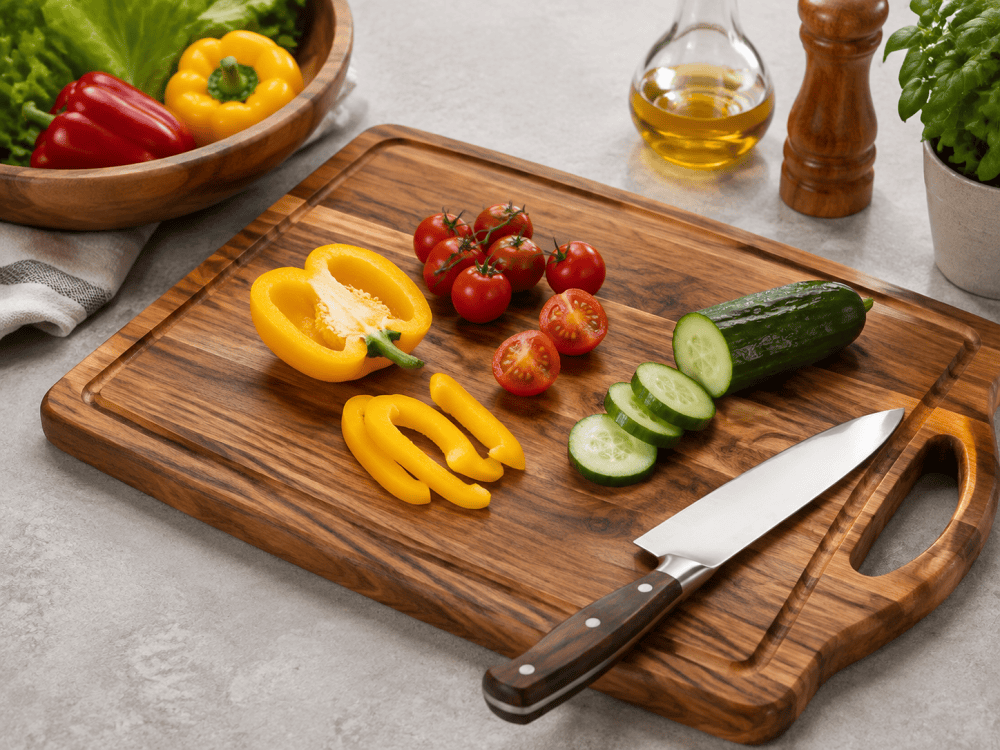


Wood Fiber vs. Wood Cutting Boards: What's the Difference?
Wood Fiber vs. Wood Cutting Boards: What's the Difference?
Wood cutting boards have been a kitchen staple for generations. Today, wood fiber cutting boards offer another option, combining wood-based materials with a manufactured composite structure. Although both are associated with wood, they are not the same product. Their construction, surface feel, maintenance requirements, and everyday performance can be quite different.
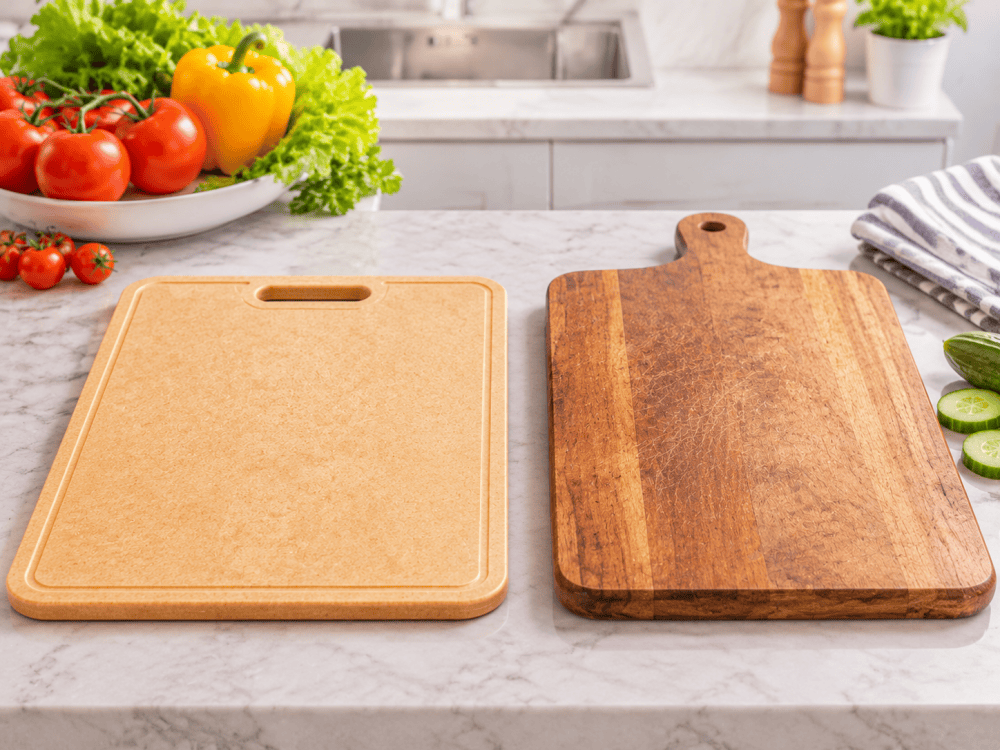
A traditional wood cutting board is made from natural wood, with its grain and structure remaining visible. A wood fiber cutting board is generally made by compressing wood fibers with a binder under controlled manufacturing conditions. Traditional wood boards offer a natural appearance and familiar cutting feel, while wood fiber boards provide a more uniform manufactured surface and may be easier to store and maintain, depending on the product specifications.
Neither material is automatically better for every kitchen. The right choice depends on how you prepare food, how much maintenance you are willing to do, and the manufacturer's care instructions.
1. What Is a Traditional Wood Cutting Board?
A traditional wood cutting board is made from natural timber. Common wood choices include maple, walnut, beech, acacia, and bamboo. Each type has its own grain pattern, color, hardness, and moisture-related characteristics.
Wood boards are commonly constructed in three ways:
Edge-Grain Wood Boards
Edge-grain boards are assembled with the long edges of wood strips facing upward. They usually have a relatively consistent appearance and are widely used for everyday food preparation.
End-Grain Wood Boards
End-grain boards are assembled with the ends of wood pieces facing upward. Their surface shows the cross-section of the wood fibers, often creating a checkerboard pattern. They are popular among cooks who prefer a substantial, traditional cutting surface.
Face-Grain Wood Boards
Face-grain boards show the broad face of the wood planks. Their natural grain patterns are often especially visible, making them attractive for serving as well as food preparation.
Because natural wood is a biological material, its performance can vary with the species, grain orientation, construction quality, moisture exposure, and finishing treatment.
2. What Is a Wood Fiber Cutting Board?
A wood fiber cutting board is a manufactured composite product made using wood fibers or other wood-based material combined with a binder. The mixture is processed and compressed to form a solid board with a relatively consistent shape and surface.
Unlike a traditional wood board, which retains the structure of solid timber, a wood fiber board is engineered through a manufacturing process. Its appearance may resemble wood, but its internal construction is different.
How Are Wood Fiber Boards Made?
The exact process depends on the manufacturer and material formulation, but production commonly involves several stages:
- Material preparation: Wood-based raw materials are processed into fibers or smaller particles suitable for composite production.
- Binder mixing: The fibers are combined with a suitable binding system. The specific binder and formulation can vary between products.
- Forming and compression: The mixture is shaped and compressed under controlled manufacturing conditions.
- Finishing: The board is trimmed, finished, and inspected for dimensions, surface quality, and other product requirements.
The final performance depends on more than the presence of wood fibers. Fiber composition, binder type, density, manufacturing conditions, and surface finishing can all affect the finished product.
For buyers evaluating wood fiber boards, it is important to request material specifications and relevant food-contact compliance documentation rather than assuming all products share the same properties.
3. Wood Fiber vs. Wood Cutting Boards: Key Differences
The most important difference is the material structure: one is made from natural timber, while the other is an engineered composite. This distinction affects several aspects of product selection and everyday use.
| Comparison | Wood Fiber Cutting Board | Traditional Wood Cutting Board |
|---|---|---|
| Material | Compressed wood fibers or wood-based material combined with a binder | Natural timber, such as maple, walnut, beech, or acacia |
| Construction | Manufactured composite structure | Solid wood or assembled wood pieces |
| Appearance | Usually more consistent in color and surface appearance | Natural grain, knots, and color variation may be visible |
| Surface Feel | Depends on density, finishing, and formulation | Depends on wood species, grain orientation, and surface treatment |
| Knife Interaction | Varies by product hardness and surface construction | Varies by wood species, grain structure, and board construction |
| Moisture Response | Depends on the composite formulation and edge sealing | Natural wood can absorb moisture and expand or contract |
| Maintenance | Follow the manufacturer's cleaning and care instructions | Often requires careful drying and periodic oiling |
| Design Options | Can be produced in different colors, shapes, and thicknesses | Natural wood species and construction influence the appearance |
| Typical Appeal | Consistent manufactured appearance and practical product design | Natural material character and traditional kitchen aesthetics |
Note: These are general material distinctions, not guaranteed performance ratings. Actual results depend on the specific board design, material formulation, manufacturing quality, and care instructions.
4. Durability: Which Cutting Board Lasts Longer?
Durability is one of the most important considerations when choosing a cutting board. However, it is difficult to declare one material universally more durable because both categories include products with different construction methods and quality levels.
Durability of Wood Fiber Cutting Boards
Wood fiber boards are manufactured under controlled conditions, which can help produce consistent dimensions and surface characteristics. Their resistance to everyday wear depends on factors such as board density, binder formulation, compression quality, and finishing.
Potential issues to evaluate include:
- Surface scratches and knife marks after repeated use.
- Edge damage caused by impacts or improper handling.
- Changes in shape or surface condition after repeated moisture exposure.
- Performance under the cleaning conditions specified by the manufacturer.
Durability of Traditional Wood Cutting Boards
Solid wood boards can provide long-term service when made from suitable timber and maintained correctly. However, natural wood responds to changes in moisture and temperature.
Common problems include:
- Warping when one side absorbs more moisture than the other.
- Cracking or splitting due to repeated drying and moisture changes.
- Staining and odor retention when the board is not cleaned and dried properly.
- Surface wear from repeated cutting and improper cleaning.
Which is more durable? A well-manufactured wood fiber board may outperform a poorly constructed wood board in some conditions, while a high-quality solid wood board can last for many years with proper care. Compare actual product specifications and testing rather than relying on material names alone.
5. Knife Friendliness: Which Surface Is Better for Knives?
The cutting surface matters because it affects how a knife feels during use and how quickly its edge may wear.
Natural wood is often chosen for its familiar cutting feel. Many cooks prefer a suitable hardwood board because it offers a balance between surface firmness and some degree of give. However, different wood species and board constructions can produce noticeably different results.
Wood fiber boards also vary. Their surface hardness depends on the fiber structure, binder, density, and manufacturing process. A board that is too hard or abrasive may be less suitable for frequent knife work, while a properly designed surface may offer a comfortable cutting experience.
What should buyers look for?
- A surface that does not feel excessively hard or abrasive during cutting.
- Consistent finishing without rough edges or raised particles.
- Product testing or manufacturer information about repeated cutting use.
- Clear guidance on suitable knives and intended applications.
For professional kitchens or consumers who regularly use high-quality knives, it is worth testing the actual board surface rather than choosing based only on the material category.
6. Cleaning and Maintenance: Which Is Easier to Care For?
Cleaning requirements are another major difference between wood fiber and traditional wood cutting boards. Neither type should be assumed to be maintenance-free.
How to Care for a Wood Fiber Cutting Board
Care instructions vary by product. For boards that are not specifically rated for dishwasher use, hand washing is generally the safer approach.
- Wash the surface with warm water and a suitable dishwashing detergent.
- Use a soft sponge or brush to remove food residue.
- Rinse thoroughly and remove excess water.
- Allow the board to dry completely before storage.
- Avoid prolonged soaking unless the manufacturer explicitly permits it.
- Follow the stated temperature and dishwasher restrictions.
Do not assume that every wood fiber cutting board is dishwasher-safe or heat-resistant. These properties depend on the board's complete formulation and must be confirmed through product specifications or testing.
How to Care for a Traditional Wood Cutting Board
Natural wood generally needs more attention to moisture management. A simple routine can help maintain its condition.
- Wash by hand after use with warm water and mild detergent.
- Do not leave the board soaking in water.
- Dry both sides and allow air circulation during storage.
- Keep the board away from prolonged exposure to direct heat.
- Apply food-grade mineral oil when appropriate to help maintain the wood surface.
- Do not put a traditional solid wood board in the dishwasher.
For both materials, cleaning should be prompt after contact with raw meat, poultry, seafood, or other foods that may cause cross-contamination. Use separate boards for different food categories when appropriate, and replace a board that develops deep grooves, cracks, or damage that cannot be cleaned effectively.
7. Moisture and Heat Resistance
Moisture and heat are two areas where buyers should pay close attention to product-specific information.
Moisture Resistance
Traditional wood naturally absorbs and releases moisture. Repeated or uneven exposure to water can contribute to swelling, warping, or cracking.
Wood fiber boards have a different internal structure, but this does not mean they are automatically waterproof. Their moisture resistance depends on the binder, density, edge treatment, and manufacturing quality. Water exposure may affect the board if its structure or edges are not sufficiently protected.
Heat Resistance
Neither natural wood nor wood fiber composite should automatically be treated as a heat-proof surface. High temperatures may cause discoloration, deformation, surface damage, or other changes depending on the product.
Before placing a hot pot or pan on a cutting board, check whether the manufacturer specifically identifies the product as suitable for that purpose. A dedicated trivet or heat-resistant mat is usually a better choice for protecting kitchen surfaces.
8. Appearance and Design: Natural Wood vs. Modern Composite
Appearance can influence the buying decision, particularly for kitchenware brands, retailers, and consumers who want a cutting board to complement their kitchen design.
Traditional Wood: Natural Grain and Character
Traditional wood boards are valued for their natural appearance. Different species create different colors and grain patterns, from the lighter tones of maple and beech to the richer appearance of walnut and acacia.
Because wood is a natural material, individual boards may show variations in grain, color, and texture. This natural variation is often part of their appeal.
Wood Fiber: Consistent and Flexible Product Design
Wood fiber boards are manufactured products, which can make it easier to develop consistent designs across a product range. Depending on the manufacturing process, brands may be able to offer different shapes, sizes, thicknesses, and colors.
This can be useful for kitchenware collections that need a coordinated appearance or a consistent product specification across multiple SKUs.
For private-label projects, buyers can discuss dimensions, surface finish, color options, packaging, and branding requirements with the manufacturer. However, customization possibilities depend on the supplier's production capabilities and the material system used.
9. Which Cutting Board Should You Choose?
The better choice depends on your cooking habits, design preferences, maintenance expectations, and budget. Here are some practical scenarios to help narrow down the decision.
Choose a Wood Fiber Cutting Board If:
- You prefer a consistent, manufactured appearance.
- You want to compare different colors, shapes, and product dimensions.
- You are looking for a board designed around specific product requirements.
- You are sourcing coordinated kitchenware products for retail or private-label collections.
- You are comfortable following product-specific cleaning and care instructions.
Choose a Traditional Wood Cutting Board If:
- You prefer the natural grain and appearance of solid timber.
- You enjoy the familiar feel of a traditional wooden cutting surface.
- You want a board made from a particular wood species.
- You are willing to hand wash, dry, and periodically maintain the board.
- You value natural material variation as part of the product's appearance.
There is no single best option for every household. Some kitchens may benefit from having both: a wood fiber board for selected everyday tasks and a traditional wood board for food preparation or serving where its natural appearance is preferred.
10. What Should Buyers Check Before Purchasing?
Whether you are buying one cutting board for home use or sourcing products for a retail brand, the material name alone is not enough. Consider the following points before making a decision.
Material and Construction
For wood fiber boards, ask about the fiber source, binder system, and manufacturing process. For traditional wood boards, check the wood species, grain orientation, and whether the board is solid or assembled from multiple pieces.
Food-Contact Compliance
Ask for relevant food-contact compliance documentation for the target market. Requirements can differ by country and product category. Verify that the documents apply to the actual finished product and its intended conditions of use.
Surface Quality
Check for smooth finishing, consistent thickness, clean edges, and the absence of visible cracks, rough spots, or manufacturing defects. For wood fiber boards, surface consistency and edge quality are particularly important inspection points.
Care Instructions
Confirm whether the product is hand-wash only, dishwasher-safe, suitable for specific temperature conditions, or requires periodic maintenance. Do not rely on assumptions based on similar-looking products.
Product Testing and Quality Control
For wholesale and private-label orders, buyers can request samples and establish inspection criteria for dimensions, thickness, appearance, surface condition, and packaging. Where relevant, discuss durability, moisture exposure, and repeated-use testing with the supplier.
11. Frequently Asked Questions
Is a wood fiber cutting board the same as a wooden cutting board?
No. A traditional wooden cutting board is made from natural timber, while a wood fiber cutting board is generally a composite product made by combining wood-based fibers with a binder. Their construction and performance characteristics can be different.
Are wood fiber cutting boards better than wooden cutting boards?
Not necessarily. Wood fiber boards may offer a more consistent manufactured appearance, while traditional wood boards provide natural grain and a familiar cutting feel. The better option depends on product quality, intended use, and maintenance preferences.
Are wood fiber cutting boards better for knives?
It depends on the board's surface hardness and construction. Traditional wood boards are often preferred for their cutting feel, but wood fiber products also vary in performance. Check the manufacturer's specifications and test the actual surface when knife care is a priority.
Can wood fiber cutting boards go in the dishwasher?
Not all wood fiber cutting boards are dishwasher-safe. Dishwasher suitability depends on the material formulation and manufacturing process. Always follow the product's stated care instructions.
Do traditional wood cutting boards need oiling?
Many traditional wood boards benefit from periodic treatment with food-grade mineral oil, depending on the wood and manufacturer's recommendations. Oiling can help maintain the surface and reduce excessive moisture exchange.
Are wood fiber cutting boards waterproof?
No universal waterproof claim can be made for all wood fiber boards. Their resistance to moisture depends on the fiber material, binder, density, edge treatment, and overall construction. Follow the manufacturer's care instructions.
Which is better for wholesale or private-label kitchenware?
Both can be suitable for wholesale and private-label collections. Wood fiber boards may offer flexibility in consistent colors, shapes, and dimensions, while natural wood boards appeal to buyers who prefer traditional materials. Buyers should compare samples, specifications, compliance documentation, production capacity, and customization options before selecting a supplier.
Final Thoughts
Wood fiber and traditional wood cutting boards may look similar at first glance, but their material structures are quite different. Traditional wood boards offer natural grain, familiar cutting characteristics, and a classic kitchen appearance. Wood fiber boards use an engineered composite structure that can support consistent dimensions and a range of product designs.
When choosing between them, consider more than appearance or material names. Surface quality, durability, moisture response, knife interaction, food-contact compliance, and cleaning requirements all deserve attention.
For consumers, the best cutting board is one that fits their cooking habits and maintenance expectations. For retailers and kitchenware brands, the right product is the one that meets the target market's requirements and delivers consistent quality.
Looking for Wood Fiber Cutting Boards for Your Kitchenware Collection?
Choosing the right cutting board involves more than selecting a material. Product dimensions, thickness, surface finish, color options, packaging, and quality requirements all influence the final product.
If you are developing a kitchenware collection or sourcing cutting boards for your brand, explore the available product options and discuss your requirements with our team.
Contact us to discuss your cutting board project, customization needs, and wholesale inquiries.
Related Blogs