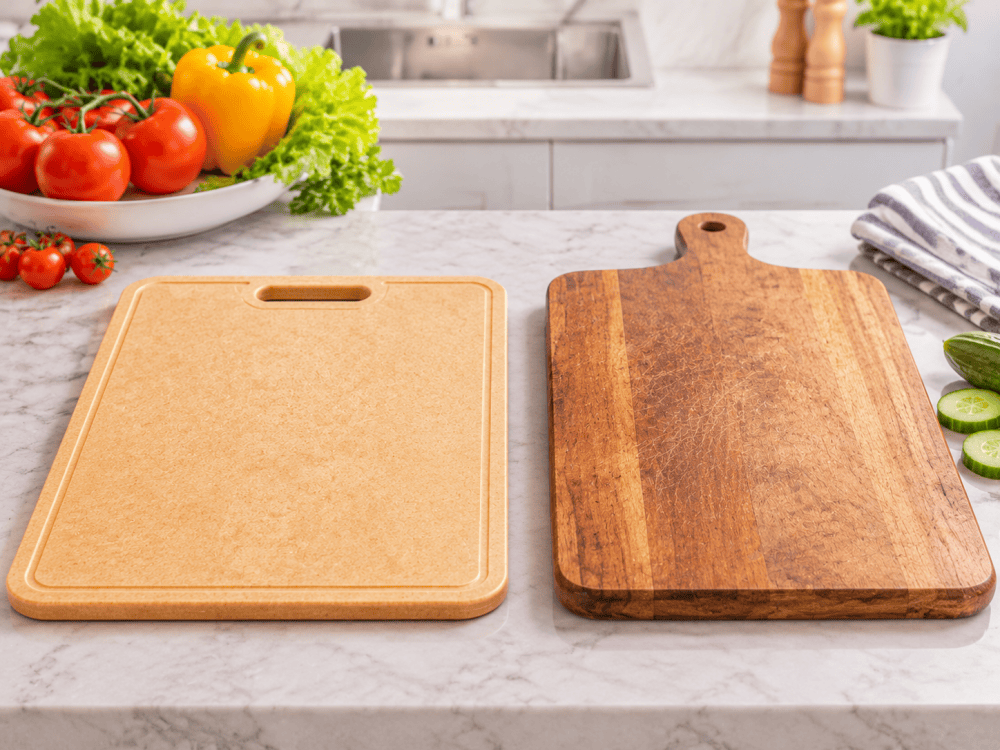


Wood Fiber vs. Plastic Cutting Boards: Which Is Better?
Wood fiber and plastic cutting boards are two popular options for modern food preparation, but they are made differently and serve different needs. Wood fiber boards are engineered from wood-based fibers and a binding system, while plastic boards are manufactured from polymers such as polypropylene (PP) or polyethylene (PE). The differences affect surface feel, maintenance, product design, and purchasing decisions.
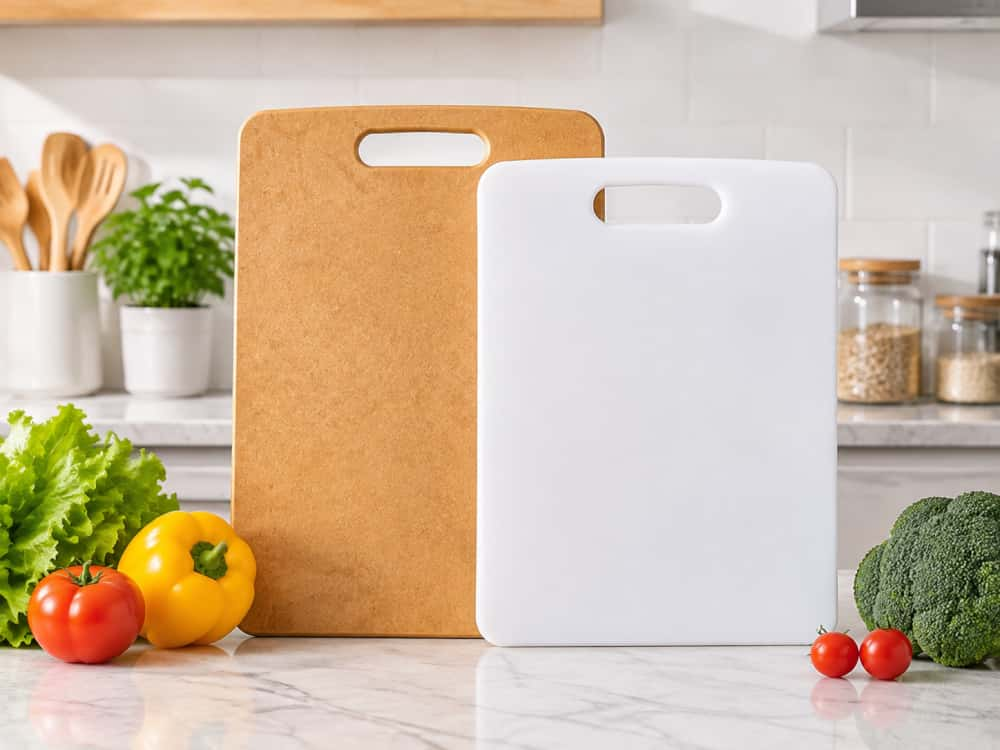
Quick Answer: Wood Fiber vs. Plastic Cutting Boards
Wood fiber cutting boards are generally dense, firm, and suitable for design-focused kitchenware collections. Plastic cutting boards offer more flexibility in polymer selection, colors, thicknesses, and formats, making them practical for many household and commercial food-preparation settings.
Neither material is automatically safer, more durable, or better for knives. The right choice depends on the board's exact composition, surface characteristics, cleaning instructions, and intended use.
Choose wood fiber when appearance, a firm surface, and a slim composite-board design are priorities. Consider plastic when color coding, a wider range of product formats, or a specific commercial cleaning routine is more important.
1. What Is the Difference Between Wood Fiber and Plastic Cutting Boards?
The main difference is the material structure. A wood fiber cutting board is a composite product made by combining wood-based fibers with a binder and processing them into a solid board. A plastic cutting board is made from a polymer material, commonly PP, PE, or HDPE.
This distinction matters because the material name alone does not determine how a board performs. The binder, polymer grade, density, thickness, surface finish, and manufacturing process all influence the finished product.
What Is a Wood Fiber Cutting Board?
A wood fiber cutting board is an engineered board made from wood fibers combined with a binding material. The mixture is processed under controlled manufacturing conditions to form a dense, solid surface.
It is different from a traditional solid wood cutting board. A solid wood board is made from a piece or multiple pieces of timber, while a wood fiber board is manufactured from processed fibers and other components.
Common product characteristics may include:
- A firm, relatively dense cutting surface.
- A uniform appearance and consistent board profile.
- A slim construction that can be convenient for storage.
- Options for different shapes, dimensions, and colors.
- Care requirements that depend on the binder and finished construction.
When evaluating a wood fiber board, buyers should ask what fibers and binders are used, whether the surface has an additional coating, and what cleaning conditions the finished product has been tested to withstand.
What Is a Plastic Cutting Board?
Plastic cutting boards are made from synthetic polymers. The most common material categories include polypropylene (PP), polyethylene (PE), and high-density polyethylene (HDPE).
These polymers have different physical properties, so not all plastic cutting boards behave in the same way. A thin PP cutting mat, for example, is very different from a thick HDPE chopping board designed for demanding food-preparation tasks.
Common product characteristics include:
- Lightweight options for everyday household use.
- Different thicknesses and levels of flexibility.
- A wide range of colors and shapes.
- Options for color-coded food-preparation systems.
- Surface marks and grooves that may develop through repeated cutting.
How Are They Made?
Wood fiber boards generally involve fiber preparation, blending with a binder, forming, pressing, and finishing. The exact process varies by manufacturer and product formulation.
Plastic boards are produced by processing polymer materials into a board or sheet, followed by cutting, shaping, surface finishing, and other manufacturing steps. Different polymers and production methods can produce different levels of rigidity, flexibility, and surface performance.
For both materials, manufacturing consistency is important. Variations in raw materials, thickness, surface finish, and edge quality can affect the finished product.
2. Wood Fiber vs. Plastic Cutting Boards: 7 Key Differences
The following comparison focuses on the factors that matter most when selecting a cutting board. These are general material tendencies, not guaranteed specifications for every product.
| Factor | Wood Fiber Cutting Board | Plastic Cutting Board |
|---|---|---|
| Material | Wood-based fibers combined with a binder | Polymer materials such as PP, PE, or HDPE |
| Surface Feel | Generally firm and dense | Varies by polymer, hardness, and thickness |
| Knife Interaction | May feel relatively hard under a knife | Depends on the polymer and surface characteristics |
| Wear | May show surface wear, damage, or edge deterioration over time | May develop knife grooves and scratches |
| Moisture Response | Depends on fiber, binder, edge treatment, and construction | Generally low water absorption, depending on polymer and design |
| Cleaning | Follow product-specific cleaning instructions | Follow product-specific cleaning instructions |
| Dishwasher Use | Must be confirmed for the specific product | Must be confirmed for the specific polymer and product |
| Design Flexibility | Shapes, sizes, colors, and finishes depend on the manufacturing process | Broad choice of colors, thicknesses, shapes, and formats |
| Typical Positioning | Modern, design-oriented, and premium kitchenware collections | Everyday household and commercial food-preparation products |
2.1 Material and Construction
Wood fiber boards are composite products. Their performance depends on both the wood-based fibers and the binder that holds the material together. Surface coatings or treatments may also influence the finished board's characteristics.
Plastic boards are polymer products. PP, PE, and HDPE have different physical properties, so the specific polymer grade and board construction should be identified before comparing products.
What this means for buyers: Do not compare a wood fiber board with an unspecified "plastic board" and assume the result applies to every plastic product. Request the exact material specification for both products.
2.2 Durability and Wear Resistance
The service life of a cutting board depends on its construction, thickness, surface quality, frequency of use, cleaning conditions, and handling.
A dense wood fiber board can provide a stable surface, but repeated cutting, impact, moisture exposure, or unsuitable cleaning may affect its surface and edges. The quality of the binder and manufacturing process is particularly relevant to the finished board's integrity.
Plastic boards can also wear through repeated use. Knife marks may accumulate, and the board may become deeply scored, warped, or damaged depending on its polymer, thickness, and use conditions.
Neither material has a universal lifespan. Buyers should compare actual samples and evaluate how the board performs under realistic use and cleaning conditions.
2.3 Knife Friendliness
Knife friendliness refers to how a cutting surface interacts with a knife edge during repeated cutting. Surface hardness, texture, and the way the material responds to pressure can all influence cutting feel and edge wear.
Wood fiber boards are generally firm and dense. Some users may find this surface harder under a knife than a softer cutting surface. However, actual performance depends on the board's formulation and finish.
Plastic boards vary in hardness. Some polymer boards provide a more yielding cutting feel, while others are relatively firm. It is therefore inaccurate to claim that all plastic boards are automatically gentler on knives.
Which is better for kitchen knives? There is no universal winner based on the material category alone. If knife-edge care is a priority, test the specific board with representative knives and compare its surface hardness and cutting feel.
2.4 Hygiene and Food Safety
Hygiene is not determined by whether a cutting board is made from wood fiber or plastic alone. The finished surface, material composition, cleaning method, board condition, and food-contact suitability all matter.
Plastic boards are widely used in food preparation, and non-porous plastic boards can be convenient to wash. However, repeated cutting may create grooves that become difficult to clean effectively.
Wood fiber boards have a composite structure. Their food-contact suitability depends on the fibers, binder, coatings, and other substances used in the finished product. Buyers should obtain documentation relevant to the intended food-contact application.
For safe food preparation, the condition of the board and the cleaning routine are essential. The U.S. Food and Drug Administration recommends washing cutting boards and utensils with soap and hot water after contact with raw meat, poultry, or seafood. It also recommends using separate boards for raw animal products and ready-to-eat foods where possible.
Read the official guidance: FDA Safe Food Handling.
2.5 Cleaning and Dishwasher Use
Plastic cutting boards are often convenient to wash, but dishwasher suitability depends on the exact polymer, board thickness, shape, and heat resistance. A product should only be described as dishwasher safe when this use has been confirmed for its specific construction.
Wood fiber boards require particular attention to the binder system and the manufacturer's maintenance instructions. Prolonged water exposure or high temperatures may affect some composite constructions.
Do not assume that every wood fiber board is dishwasher safe, or that every plastic board can withstand repeated dishwasher cycles.
Before buying, check:
- Whether hand washing or dishwasher cleaning is recommended.
- The maximum stated cleaning temperature, if applicable.
- Whether soaking is permitted.
- How the board should be dried and stored.
- Which sanitizing methods are compatible with the material.
2.6 Water Resistance
Plastic polymers such as PP and PE generally have low water absorption, which is one reason they are widely used in kitchen products. However, the board's shape, surface condition, and manufacturing quality still matter.
Wood fiber boards are composite products, so their response to water depends on the fiber structure, binder, edge treatment, and overall construction. Water resistance should be evaluated through product-specific testing rather than assumed from the term "wood fiber."
For either material, standing water, prolonged soaking, and improper storage should be avoided unless the product instructions explicitly allow them.
2.7 Sustainability and Environmental Impact
Wood fiber boards use wood-based raw materials, while conventional plastic boards are generally made from synthetic polymers. This difference is relevant, but it does not automatically make one product more sustainable than the other.
A wood fiber board may contain binders, coatings, and other components that affect recycling or disposal. A plastic board may be made from a polymer that is technically recyclable, but practical recycling depends on local collection and processing systems.
A more meaningful sustainability comparison considers:
- The origin and sourcing of raw materials.
- The type and amount of binder, additives, or coatings.
- Energy and resource use during manufacturing.
- Expected product lifespan under normal use.
- Packaging and transportation requirements.
- Available recycling or end-of-life options.
For brands and importers, sustainability claims should be supported by supplier documentation and relevant product information. A wood-based composite should not automatically be described as biodegradable, compostable, or recyclable.
3. Which Cutting Board Is Better for Different Kitchen Uses?
The best cutting board depends on the user's workflow. A product that works well in a home kitchen may not be the most practical choice for a high-volume commercial operation.
For Everyday Home Cooking
Both materials can work for everyday food preparation when the finished product is suitable for food contact and maintained correctly.
Wood fiber may appeal to consumers who prefer a firm, slim board with a modern appearance. Plastic may appeal to users who want a lightweight board or a wider choice of colors, thicknesses, and formats.
For households that prepare different food categories regularly, having more than one board can be useful for separating raw animal products from ready-to-eat foods.
For Raw Meat, Poultry, and Seafood
A cutting board used for raw meat, poultry, or seafood must be cleaned thoroughly after use. The key consideration is not simply the material, but whether the surface can be cleaned and maintained effectively.
The FDA recommends using separate cutting boards for raw animal products and foods such as fresh produce that will be eaten without further cooking. It also advises washing boards with soap and hot water between preparation tasks.
See the FDA's guidance on selecting and serving produce safely.
For Professional and Commercial Kitchens
Plastic boards are commonly used in commercial food-preparation environments because they are available in different colors, thicknesses, and formats. Color-coded systems can help staff distinguish boards assigned to different food categories.
However, the board must be compatible with the kitchen's cleaning and sanitizing procedures. Deep grooves, cracks, and excessive wear should be treated as reasons to inspect or replace a board.
Wood fiber boards may suit selected food-preparation or presentation applications when their product specifications and cleaning requirements match the operation. They should not be introduced into a commercial workflow without checking those requirements.
For Premium Kitchenware Collections
Wood fiber boards can be a good option for brands developing a coordinated, modern kitchenware collection. Their engineered construction can support consistent shapes, slim profiles, and a clean visual presentation.
Plastic boards also offer strong product-development flexibility. Different colors, dimensions, thicknesses, and formats can support household collections, food-preparation sets, and commercial product ranges.
For brands, the decision should be based on target customers, retail positioning, price range, product performance, and the supplier's customization capabilities.
| Use Case | Material to Consider | What Matters Most |
|---|---|---|
| Everyday home cooking | Both | Surface feel, size, maintenance, and design |
| Color-coded food preparation | Plastic | Color availability, clear identification, and cleaning |
| Modern kitchenware collections | Wood fiber or plastic | Appearance, consistency, and product positioning |
| High-volume commercial use | Commercial-grade product selected by specification | Cleaning compatibility, wear, and replacement planning |
| Knife-focused preparation | Compare tested samples | Surface hardness and cutting feel |
4. Wood Fiber vs. Plastic Cutting Boards: Cost and Buying Considerations
There is no reliable universal price rule stating that wood fiber cutting boards are always more expensive or that plastic boards are always cheaper. Retail price and wholesale cost depend on the exact material, dimensions, thickness, construction, finish, packaging, and order quantity.
What Affects the Price of a Wood Fiber Cutting Board?
- Fiber and binder formulation: Raw material selection and the composition of the finished board.
- Manufacturing process: Pressing, finishing, trimming, and quality-control requirements.
- Dimensions and thickness: Larger or thicker boards generally require more material.
- Surface and edge finishing: Additional finishing steps can affect production cost.
- Packaging: Retail boxes, inserts, labels, and protective packaging.
- Customization: Special shapes, colors, branding, and product development requirements.
What Affects the Price of a Plastic Cutting Board?
- Polymer type and grade: PP, PE, and HDPE are different material categories.
- Board thickness: Material volume and construction influence cost.
- Manufacturing method: Cutting, molding, texturing, and finishing requirements.
- Product design: Handles, grooves, non-slip features, and other details.
- Color and material requirements: Custom colors or specific material grades may affect pricing.
- Order quantity and packaging: Production volume and retail presentation influence the final quotation.
What Should You Check Before Buying?
Whether you are purchasing one board for your kitchen or evaluating products for a retail collection, use the following checklist:
- Confirm the material. Identify the exact wood fiber composition or plastic polymer.
- Check dimensions and thickness. Make sure the board suits the intended food-preparation tasks.
- Inspect the surface. Look for an even finish without cracks, chips, rough areas, or visible defects.
- Review the edges. Check for consistent finishing and signs of separation or damage.
- Read the care instructions. Confirm hand-washing, dishwasher, soaking, and temperature limitations.
- Verify food-contact suitability. Request relevant documentation for the intended market and use.
- Compare the total value. Consider product quality, expected service conditions, packaging, and replacement needs rather than price alone.
When Should You Replace a Cutting Board?
Cutting boards should be inspected regularly, regardless of material. Replace a board when it develops deep grooves that are difficult to clean, cracks, splits, persistent damage, or other defects that compromise its condition.
A board that is badly worn may no longer be suitable for hygienic food preparation. The University of Illinois Extension also advises replacing boards with numerous deep cut marks and maintaining separate boards for different food-preparation tasks.
Reference: University of Illinois Extension – Cutting Boards.
5. Which Cutting Board Should You Choose?
If you are still deciding between wood fiber and plastic, use your main purchasing priority as the starting point.
Choose Wood Fiber If You Prioritize:
- A firm, dense composite cutting surface.
- A slim, modern product appearance.
- A coordinated kitchenware collection with consistent shapes and finishes.
- A product design that fits a premium or design-focused retail position.
- A maintenance routine that matches the board's specific care instructions.
Choose Plastic If You Prioritize:
- A wide range of polymer options and board formats.
- Different colors for food-preparation organization.
- Lightweight or flexible board designs.
- Product options for household or commercial kitchen environments.
- A board whose cleaning requirements are compatible with your kitchen routine.
Our recommendation: Do not choose a cutting board based only on whether it is made from wood fiber or plastic. Compare the finished product's material specification, surface performance, cleaning requirements, and intended application. A well-designed product with suitable specifications is more important than a material label by itself.
6. What Should Importers and Kitchenware Brands Know?
For importers, wholesalers, retailers, and private-label kitchenware brands, selecting between wood fiber and plastic cutting boards is also a product-development decision. Material choice affects product positioning, manufacturing requirements, compliance documentation, packaging, and the final customer experience.
1. Match the Material to Your Target Customer
Start with the product's intended market. A modern household kitchenware collection may prioritize appearance, dimensions, and coordinated designs. A commercial food-preparation range may prioritize material specifications, cleaning compatibility, color coding, and replacement planning.
2. Request Complete Material Specifications
For wood fiber boards, ask for information about the wood fiber source, binder system, coatings, thickness, and production process. For plastic boards, confirm the polymer type, material grade, thickness, and any relevant additives or surface treatments.
Avoid accepting broad descriptions such as "natural wood fiber" or "food-grade plastic" without supporting specifications.
3. Verify Food-Contact Compliance for the Finished Product
Food-contact compliance is an important part of cutting board sourcing. The requirements depend on the destination market and the substances used in the finished product.
For the United States, the FDA explains that the regulatory status of a food-contact material depends on the individual substances used in the article and their intended conditions of use. This is particularly relevant when evaluating composite materials, binders, coatings, colorants, and other components.
Suppliers should provide relevant declarations, test reports, or other supporting documentation for the actual product configuration and intended use.
Official reference: FDA – Determining the Regulatory Status of Components of a Food Contact Material.
4. Test Samples Before Confirming Bulk Orders
Product samples help buyers evaluate actual performance instead of relying only on a material description or product photograph.
Depending on the product and intended use, sample evaluation may include:
- Dimensional accuracy and thickness consistency.
- Surface finish and cutting feel.
- Edge quality and overall construction.
- Resistance to expected moisture and cleaning conditions.
- Warping, cracking, or other damage under relevant use conditions.
- Packaging protection and presentation.
Testing should follow a defined specification and realistic use conditions. A sample that looks good in a photograph is not enough to establish long-term product performance.
5. Consider OEM and Private Label Customization
Both wood fiber and plastic cutting boards can offer customization opportunities, depending on the supplier's manufacturing capabilities.
Common OEM and private-label requirements include:
- Custom dimensions, thicknesses, and shapes.
- Color selection and product finish.
- Handles, hanging holes, or other design details.
- Logo placement and private-label branding.
- Retail packaging and coordinated product sets.
- Product specifications and quality inspection requirements.
Before mass production, buyers should confirm the approved sample, material specification, packaging artwork, inspection criteria, and compliance documentation.
7. Frequently Asked Questions
Is wood fiber better than plastic for cutting boards?
Not in every situation. Wood fiber boards generally offer a firm, dense composite surface and a modern appearance. Plastic boards offer a wider choice of polymer types, colors, thicknesses, and formats. The better option depends on the product's construction, intended use, cleaning requirements, and personal preference.
Are wood fiber cutting boards safer than plastic cutting boards?
Neither material is automatically safer. Food-contact suitability depends on the finished product's composition, including fibers, binders, polymers, additives, and surface treatments. Buyers should check relevant documentation and follow the manufacturer's cleaning instructions.
Do wood fiber cutting boards dull knives?
Wood fiber boards are generally firm and dense, so some may feel harder under a knife than softer cutting surfaces. However, knife-edge wear depends on the actual surface characteristics and knife use. Test the specific board with representative knives rather than relying on the material name alone.
Are wood fiber cutting boards dishwasher safe?
Not all wood fiber cutting boards are dishwasher safe. High temperatures and prolonged water exposure may affect the binder or board construction. Check the manufacturer's care instructions for the specific product before placing it in a dishwasher.
Can plastic cutting boards harbor bacteria?
Any cutting board can become difficult to clean if its surface is heavily worn or damaged. Repeated cutting can create grooves in plastic boards, so inspect them regularly and replace boards with deep, hard-to-clean marks. Proper washing and separating raw foods from ready-to-eat foods are also important.
Which cutting board is better for raw meat?
Both materials may be used for raw meat preparation if the finished product is suitable for the intended food-contact use and can be cleaned correctly. Use a separate board for raw meat, poultry, and seafood, and wash it thoroughly after use. Follow the manufacturer's cleaning and sanitizing instructions.
How long do wood fiber cutting boards last?
There is no universal lifespan for wood fiber cutting boards. Service life depends on the fiber and binder formulation, manufacturing quality, frequency of use, moisture exposure, and maintenance. Replace a board if it develops cracks, splits, deep damage, or other defects that affect safe cleaning and use.
Are wood fiber cutting boards environmentally friendly?
Wood fiber boards use wood-based raw materials, but their environmental impact also depends on binder composition, sourcing, manufacturing, product lifespan, and disposal options. A wood fiber composite is not automatically biodegradable, compostable, or recyclable.
Are plastic cutting boards cheaper than wood fiber cutting boards?
Not always. Price depends on the polymer or composite formulation, dimensions, thickness, manufacturing process, finishing, packaging, customization, and order quantity. Compare products with similar specifications before making a cost decision.
Can wood fiber and plastic cutting boards be customized for private-label brands?
Yes. Depending on supplier capabilities, customization may include dimensions, shapes, colors, thicknesses, branding, and retail packaging. Buyers should confirm the available options, minimum order quantities, material specifications, and testing requirements before production.
8. Final Verdict: Wood Fiber or Plastic Cutting Boards?
Wood fiber and plastic cutting boards are designed around different material structures and product possibilities. Wood fiber boards can suit customers who value a firm composite surface and a modern kitchenware appearance. Plastic boards offer a broad selection of polymers, colors, thicknesses, and formats for different household and commercial applications.
For home users, the decision often comes down to preferred surface feel, appearance, and maintenance. For commercial kitchens, cleaning compatibility, board condition, and operational requirements should take priority. For importers and kitchenware brands, material specifications, food-contact documentation, product testing, and supplier capabilities are essential.
The best cutting board is not simply the one made from a particular material. It is the one whose construction, performance, and care requirements match the way it will actually be used.
Developing a Custom Cutting Board Collection?
Choosing the right cutting board material is an important step in developing a successful kitchenware range. Whether you are considering wood fiber cutting boards, plastic cutting boards, or a combination of materials, the product specification should match your target customers and market requirements.
Kitlucy works with B2B buyers on kitchenware product development and sourcing, including OEM, ODM, and private-label requirements. Discuss your preferred materials, product designs, dimensions, and packaging needs with our team.
Related Blogs