

Creative Cutting Board Designs: 3 Unique Styles for Modern Kitchens
Creative Cutting Board Designs: 3 Unique Styles for Modern Kitchens
A cutting board is an everyday kitchen essential, but its design does not have to be purely functional. Creative cutting board designs combine practical food preparation features with distinctive shapes, colors, and visual details that help kitchenware products stand out.
From playful animal-shaped boards to elegant oval designs, shaped cutting boards offer different opportunities for kitchenware brands, gift retailers, supermarkets, and online stores. The right design can appeal to a particular consumer group while maintaining the basic requirements of a useful food preparation tool.
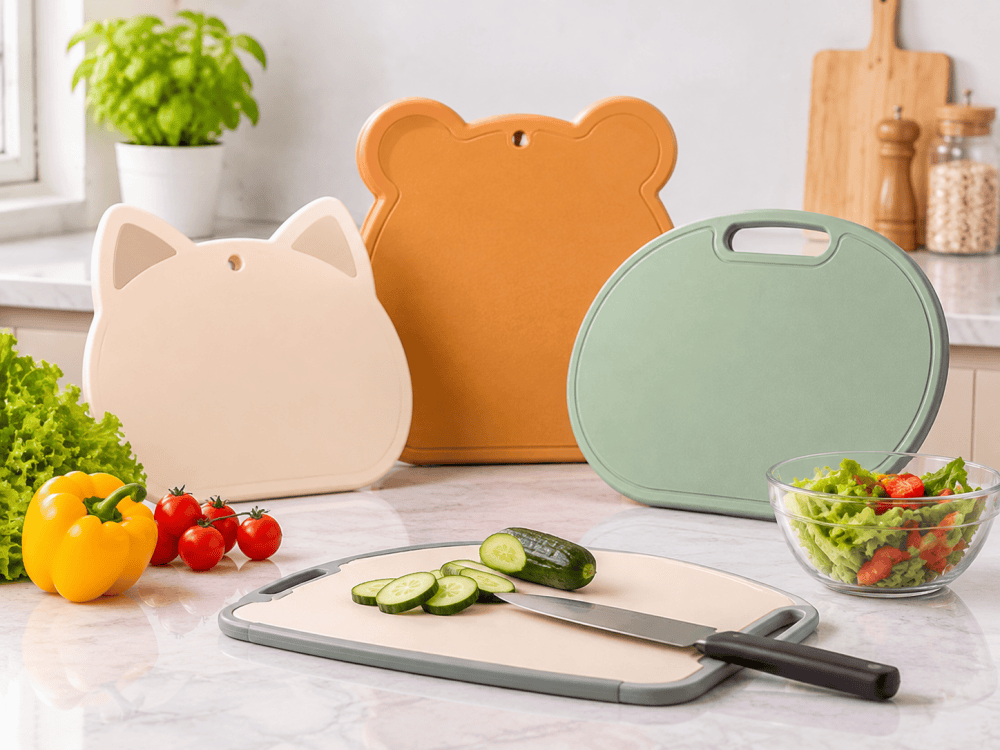
Quick Answer: Creative cutting board designs are cutting boards that use distinctive shapes, colors, or functional details to differentiate themselves from conventional rectangular boards. Popular styles include cat-shaped, bear-shaped, and oval cutting boards. When selecting one, buyers should consider usable cutting area, material, edge design, cleaning requirements, packaging, and intended market.
What Makes a Cutting Board Design Creative?
A creative cutting board is more than a conventional board with an unusual outline. Its design should combine visual differentiation with practical food preparation functions.
For example, an animal-shaped cutting board can appeal to consumers who enjoy playful kitchen accessories, while an oval cutting board may suit buyers looking for a softer, more minimalist appearance.
When evaluating a creative cutting board, consider these four design elements:
- Shape and silhouette: Distinctive outlines can make a product easier to recognize and differentiate.
- Practical cutting area: The usable surface should be large enough for the intended food preparation tasks.
- Handling and storage: Handle openings, thickness, weight, and overall dimensions affect everyday convenience.
- Material and maintenance: The material and surface finish influence cleaning, durability, and product positioning.
A successful design balances appearance with usability. An attractive shape should not unnecessarily reduce the cutting area, create difficult-to-clean corners, or make the board unstable during use.
3 Creative Cutting Board Designs to Explore
1. Cat-Shaped Cutting Boards: A Playful Design for Lifestyle and Gift Markets
Cat-shaped cutting board sets with knives bring a playful visual element to everyday kitchen accessories. Their recognizable animal-inspired outline makes them different from traditional rectangular cutting boards.
This design can be considered by retailers developing kitchen gift collections, lifestyle products, or accessories aimed at consumers who appreciate cute and distinctive home products.

Design considerations:
- Keep the central cutting surface sufficiently wide for everyday preparation.
- Pay attention to the shape of the ears, edges, and other decorative details.
- Ensure the board can be stored conveniently in a kitchen cabinet or on a countertop.
- If sold as a set, consider how the matching knife and cutting board are packaged together.
For B2B buyers, a cat-shaped board can also provide opportunities for coordinated colors, gift packaging, and private-label product collections.
2. Bear-Shaped Cutting Boards: Cute Kitchen Accessories with Retail Appeal
Bear-shaped plastic cutting boards use a familiar animal silhouette to create a friendly and approachable product appearance.
Compared with conventional boards, the bear-shaped outline gives retailers another way to build themed kitchenware collections. It may be suitable for gift shops, lifestyle retailers, online stores, and selected family-oriented product ranges.

Design considerations:
- Maintain a practical central area for chopping and slicing.
- Use smooth, rounded edges to create a consistent finished appearance.
- Consider board thickness and weight when planning product positioning.
- Evaluate whether the design is suitable for hanging, stacking, or drawer storage.
For product developers, bear-shaped designs can be adapted through color selection, surface details, dimensions, and packaging. However, decorative elements should not compromise the board's food preparation function or make cleaning more difficult.
3. Oval Cutting Boards: A Modern Choice for Minimalist Kitchens
Oval cutting boards offer a different approach to creative design. Instead of using an animal-inspired outline, they rely on smooth curves and a simple silhouette.
The rounded shape can complement contemporary kitchen aesthetics and may also work well for serving applications, depending on the board's material, surface, and construction.

Design considerations:
- Choose dimensions that provide enough usable cutting space.
- Consider whether the board is intended primarily for food preparation, serving, or both.
- Check edge thickness and overall weight for comfortable handling.
- Use a surface finish that suits the product's intended cleaning and maintenance requirements.
Oval boards can be a useful option for brands that prefer a clean, understated product appearance rather than novelty-driven shapes.
Creative Cutting Board Designs Compared
Different shapes serve different product positioning goals. The following comparison can help retailers and product developers identify which design is more suitable for their target market.
| Design | Visual Style | Potential Market | Key Design Priority |
|---|---|---|---|
| Cat-shaped | Playful and recognizable | Gift shops, lifestyle retailers, online stores | Balance decorative shape with usable cutting area |
| Bear-shaped | Cute and friendly | Kitchen gift collections, family-oriented retail | Rounded edges and convenient storage |
| Oval | Simple and modern | Homeware retailers, minimalist kitchen collections | Surface area, proportions, and versatility |
These are potential positioning directions rather than fixed consumer preferences. Actual suitability depends on product specifications, pricing, presentation, and the needs of each retail channel.
How to Choose Materials for Creative Cutting Boards
The material is an important part of cutting board development. It affects the product's weight, flexibility, surface characteristics, cleaning requirements, and manufacturing possibilities.
PP Plastic
Polypropylene (PP) is commonly used in plastic kitchenware. It can be molded into different shapes and produced in a variety of colors, making it a practical option for animal-shaped and other decorative cutting boards.
When evaluating PP boards, buyers should consider material specifications, surface finish, thickness, edge quality, and food-contact suitability for the intended market.
TPU
Thermoplastic polyurethane (TPU) is a flexible material that can be used in certain cutting board designs. Its flexibility may support products designed for easier handling or transferring chopped ingredients.
For creative shapes, buyers should evaluate whether the material provides sufficient stiffness and stability for the intended size and application. Food-contact suitability should be confirmed through relevant product documentation and testing.
Composite Materials
Composite cutting boards use combinations of materials to achieve specific surface, structural, or visual characteristics. Their properties depend on the actual fiber, binder, coating, and manufacturing process.
Buyers should request complete material specifications and care instructions instead of assuming that all composite boards have the same performance or maintenance requirements.
What Should B2B Buyers Check Before Sourcing?
For importers, wholesalers, distributors, and private-label brands, selecting a creative cutting board involves more than choosing an attractive shape. Product functionality, manufacturing consistency, documentation, and packaging all matter.
1. Design Feasibility and Usable Surface
Ask the manufacturer to confirm the board's overall dimensions, thickness, weight, and actual cutting area. Animal-shaped designs should be reviewed carefully to ensure decorative outlines do not make the product inconvenient to use.
2. Material Specifications and Food-Contact Documentation
Confirm the exact material composition and request relevant food-contact test reports or supporting documentation for the intended sales market. Do not rely on general descriptions such as food-grade plastic without checking the specific material and finished product.
3. Surface Finish and Manufacturing Quality
Inspect the cutting surface, edges, corners, thickness consistency, and any handle openings. For molded products, also evaluate visible molding marks, flash, deformation, and color consistency.
4. Cleaning and Maintenance Requirements
The product should come with clear care instructions based on its actual construction. Buyers should confirm whether the board is suitable for dishwasher cleaning rather than assuming that all plastic or composite boards have the same cleaning compatibility.
5. Packaging and Retail Presentation
Creative cutting boards may be sold individually or as part of a coordinated set. Consider packaging dimensions, product protection, retail display requirements, barcode placement, and whether the packaging communicates the product's intended use clearly.
6. OEM and Private Label Options
For brands developing their own kitchenware collections, discuss customization possibilities such as:
- Custom shapes, dimensions, and thicknesses
- Material and color options
- Logo application and private-label packaging
- Matching knives or other kitchen accessories
- Retail gift sets and coordinated product collections
Before confirming production, request samples and approve the final specifications. Any change in material, colorant, coating, or construction may affect the finished product and should be evaluated accordingly.
Frequently Asked Questions About Creative Cutting Boards
What are the most popular creative cutting board shapes?
Common design directions include animal-inspired shapes, oval boards, rounded-edge boards, and other distinctive silhouettes. The most suitable option depends on the intended consumer group, retail positioning, and practical cutting requirements.
Are shaped cutting boards practical for everyday use?
Yes. Shaped cutting boards can be practical when their dimensions, cutting surface, thickness, and stability are designed for actual food preparation. A decorative outline should not unnecessarily reduce the usable area or make the board difficult to handle.
Are animal-shaped cutting boards suitable as gifts?
Animal-shaped designs can be considered for kitchen gift collections because their recognizable appearance gives them a distinctive presentation. Retail suitability also depends on product quality, packaging, pricing, and the target customer.
Which material is suitable for creative cutting boards?
PP is a common option for molded plastic designs, while TPU may be suitable for selected flexible applications. Composite materials offer other design possibilities. The right choice depends on the intended use, product construction, manufacturing requirements, and food-contact documentation.
Can manufacturers customize cutting board shapes and colors?
Customization possibilities vary by manufacturer and production method. Buyers can discuss shape, dimensions, thickness, colors, logo application, and retail packaging as part of an OEM or private-label project.
What should importers consider when buying creative cutting boards in bulk?
Importers should evaluate product specifications, material documentation, sample quality, production consistency, packaging, minimum order quantities, lead times, and the manufacturer's ability to meet the requirements of the destination market.
Conclusion: Combining Creative Design with Everyday Functionality
Creative cutting board designs give kitchenware brands more ways to differentiate their product collections. Cat-shaped and bear-shaped boards offer playful visual styles, while oval cutting boards provide a simpler and more contemporary alternative.
However, an attractive appearance alone does not make a successful kitchen product. Usable cutting space, material selection, surface quality, cleaning requirements, and convenient storage should all be considered during product development.
For retailers, importers, and private-label brands, the best creative cutting board is one that combines a recognizable design with practical functionality and consistent manufacturing quality.
Develop Your Own Cutting Board Collection
Looking for creative cutting board designs for your kitchenware business? Kitlucy works with global buyers on kitchenware product development, OEM/ODM customization, and private-label solutions.
Whether you are sourcing animal-shaped cutting boards, modern oval designs, or customized cutting board collections, contact our team to discuss your product requirements.
Contact KitlucyRelated Blogs