Can Aluminum Cutting Boards Dull Knife Blades?
Can Aluminum Cutting Boards Dull Knife Blades?
Yes, aluminum cutting boards can contribute to knife-edge wear because aluminum is a rigid metal surface that provides less cushioning than many wood and plastic cutting boards. Repeated contact between a knife edge and a hard surface may cause the edge to wear more quickly or lose its sharp feel over time.
However, the effect depends on several factors, including the knife's steel, edge geometry, cutting technique, the condition of the board, and how frequently the knife is used. Aluminum cutting boards are not all identical, so it is important to evaluate the specific product rather than assume every metal board will affect every knife in the same way.
1. Why Can Aluminum Cutting Boards Dull Knives?
A knife blade has a thin cutting edge that separates food as you cut. During chopping, that edge repeatedly contacts the cutting surface. The properties of the surface can influence how the edge wears over time.
Aluminum is a rigid cutting surface
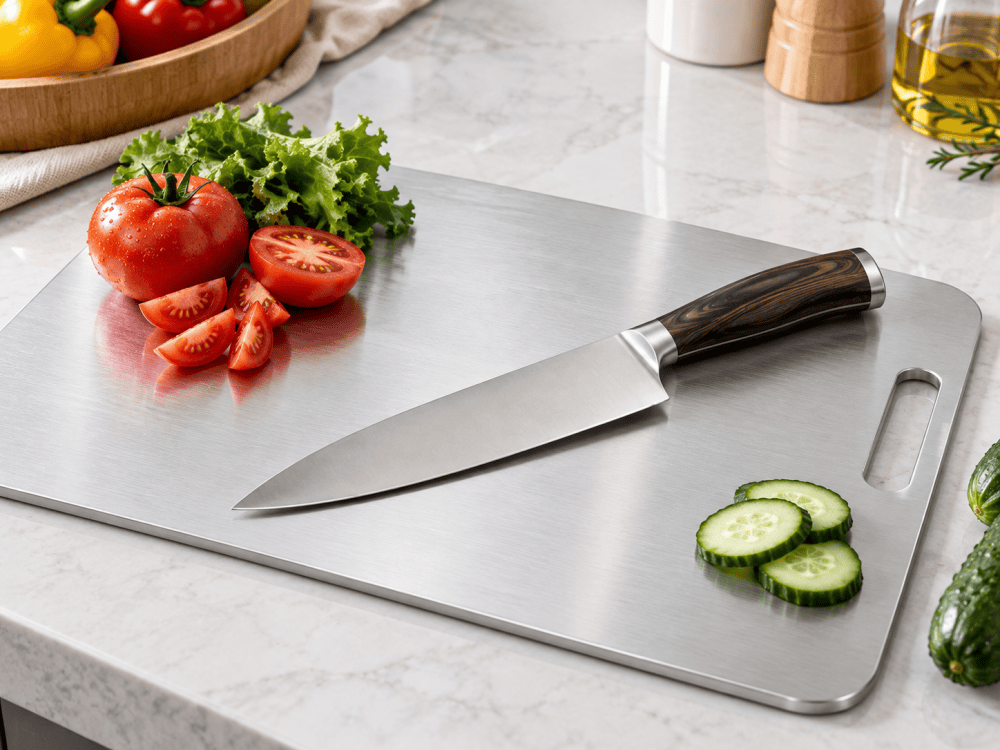
Aluminum is a metal with a relatively rigid surface compared with common wood and plastic cutting boards. When a knife strikes a hard surface, the cutting edge has less cushioning beneath it. Repeated impact and sliding contact can contribute to edge wear.
This does not mean that every contact with aluminum will immediately dull a knife. The amount of wear depends on the materials and geometry involved, the force applied, and the frequency of use.
Repeated contact affects the cutting edge
During everyday chopping, the knife edge may experience gradual wear, tiny deformations, or damage. A rigid board can increase the severity of edge contact compared with a more forgiving cutting surface, particularly when the user chops forcefully or repeatedly.
Over time, a knife may require more frequent sharpening to maintain its cutting performance. The exact rate cannot be predicted from the board material alone.
Surface finish also matters
An aluminum board's finish, texture, and condition may affect how the blade interacts with it. Rough areas, damage, or surface irregularities can change the contact conditions.
Nevertheless, a smooth-looking surface is not necessarily knife-friendly. Surface appearance alone cannot establish how a cutting board will affect a blade during repeated use.
2. Does Aluminum Dull Knives Faster Than Plastic or Wood?
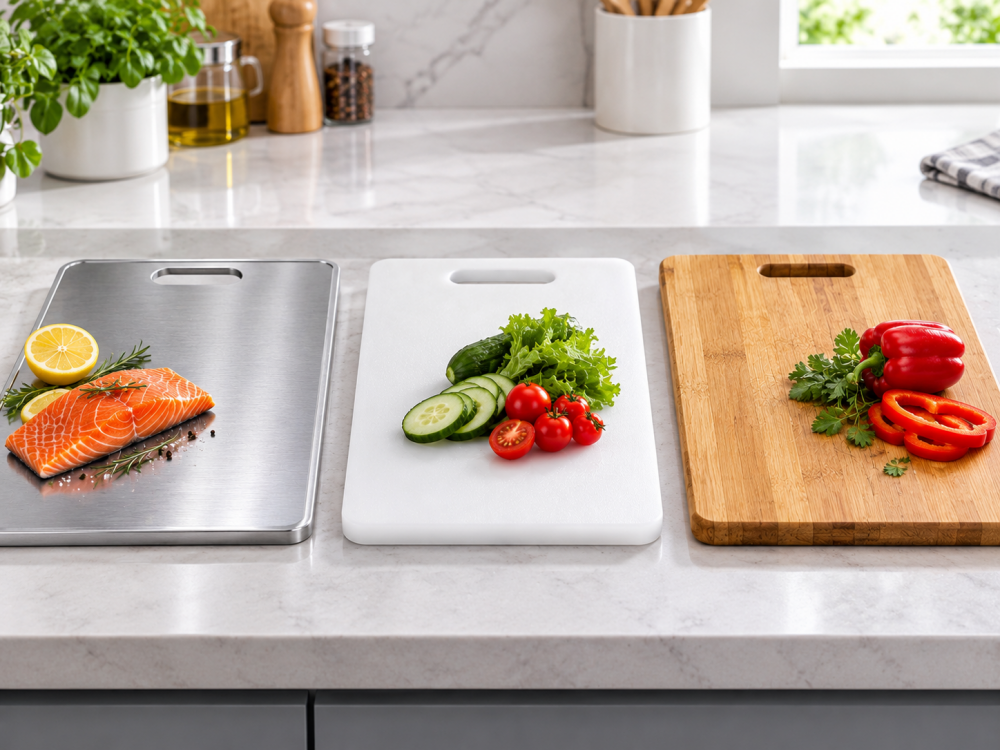
For routine food preparation, suitable wood and plastic cutting boards are generally more forgiving to knife edges than rigid metal surfaces. They are widely used for everyday chopping because their surfaces provide a different type of contact with the blade.
The comparison below describes general tendencies rather than a guarantee for every product. Board formulation, construction, condition, and cutting technique all matter.
| Cutting Board Material | Effect on Knife Edges | Typical Consideration |
|---|---|---|
| Aluminum | Rigid contact may contribute to faster edge wear | Verify the intended use and consider knife maintenance needs |
| Plastic | Generally more forgiving than rigid metal | Inspect for deep grooves and wear; clean and sanitize as appropriate |
| Wood | Generally more forgiving than rigid metal | Requires appropriate washing, drying, and ongoing care |
| Glass or ceramic | Very hard surfaces can be particularly harsh on knife edges | Usually not the preferred choice for routine chopping |
For most home kitchens and professional food-preparation environments, choosing a cutting board that is kind to knife edges can help reduce unnecessary wear. Food-contact suitability, hygiene, durability, and maintenance requirements should also be considered.
3. Which Knives Are Most Affected by Aluminum Cutting Boards?
All knife edges can experience wear during use, but the effects of a hard cutting surface may vary according to the blade's design and how the knife is used.
Thin, finely sharpened blades
Knives with thin, finely sharpened edges are designed to cut efficiently. Repeated contact with a rigid board may compromise that fine edge, especially when chopping with considerable force.
High-hardness kitchen knives
Some harder knife steels can hold a sharp edge well but may be less tolerant of certain kinds of impact, depending on their composition, heat treatment, and edge geometry. Contact with a rigid board may therefore be an important consideration for knives designed for precision cutting.
Hardness alone does not determine whether a knife will be damaged. Steel composition, toughness, edge angle, and cutting technique also influence performance.
Everyday chef's knives and utility knives
Even general-purpose kitchen knives can lose their sharp feel through repeated use on a rigid surface. If a knife is used many times a day, the cumulative effect of the cutting surface may become more noticeable.
4. Can You Use an Aluminum Cutting Board Without Damaging Your Knives?
There is no universal rule that every aluminum cutting board will damage every knife. However, if maintaining a sharp edge is important, it is sensible to avoid using a rigid metal surface as the primary board for frequent chopping.
If you already own an aluminum cutting board, consider the following practices:
- Use a more forgiving board for routine chopping. Choose a suitable wood or plastic cutting board for frequent slicing, dicing, and chopping.
- Avoid excessive chopping force. Forceful impacts can increase stress on the blade edge regardless of the board material.
- Use the right tool for the task. Match the knife to the ingredient and cutting method rather than forcing the blade through hard foods.
- Maintain the blade properly. Follow the knife manufacturer's guidance for honing, sharpening, and storage.
- Inspect the board's condition. Stop using a board that has sharp edges, damaged surfaces, or defects that make it unsuitable for food preparation.
These practices can help reduce unnecessary wear, but they do not eliminate the potential effect of repeated contact with a rigid metal surface.
5. Are Aluminum Cutting Boards a Good Choice for Everyday Cooking?
That depends on your priorities. Aluminum cutting boards may appeal to buyers interested in metal construction, but they are not automatically the best option for every kitchen task.
When knife preservation matters most
If you frequently use chef's knives, precision knives, or finely sharpened blades, a suitable wood or plastic cutting board is generally a more practical choice for routine chopping.
When evaluating a metal cutting board
Consider the product's intended purpose, material specification, surface finish, stability, cleanability, and manufacturer instructions. Also consider whether the board's effect on knife edges is acceptable for your intended application.
Do not select a board solely because it is described as durable, hygienic, or easy to clean. Those claims should be assessed alongside food-contact suitability, maintenance requirements, and knife performance.
For a broader look at the material, read What Is an Aluminum Cutting Board? Uses, Pros, Cons & Safety.
6. How to Choose a Knife-Friendly Cutting Board
If you want to protect your knives while preparing food, look beyond the board's appearance and consider the following factors.
Choose a suitable surface material
Wood and plastic boards are common options for everyday chopping because they generally provide a more forgiving surface than rigid metal or glass. The right choice depends on your food-preparation tasks, cleaning routine, and product requirements.
Check surface condition and construction
A board should be stable during use and free from defects that interfere with safe cutting. Deep grooves, cracks, rough areas, or other deterioration may affect cleanability and performance.
Consider cleaning and maintenance
A knife-friendly surface is only one part of the decision. The board must also be appropriate for food contact and capable of being cleaned and maintained according to its intended use.
Match the board to your kitchen routine
For frequent chopping, choose a surface that balances knife care, food safety, cleaning, and durability. If you prepare different types of food, consider using separate boards according to your kitchen's food-safety procedures.
7. What Should B2B Buyers Consider When Sourcing Cutting Boards?
For kitchenware distributors, retailers, importers, and private-label brands, selecting a cutting board involves more than comparing unit prices. The product should meet the needs of its target users and be supported by accurate product information.
- Intended application: Define whether the product is designed for routine chopping, serving, or another specific purpose.
- Material specification: Confirm the exact material and surface finish rather than relying on a generic product description.
- Knife performance: Evaluate whether the surface is appropriate for the knives customers are likely to use.
- Food-contact suitability: Request relevant documentation for the finished product and target market.
- Quality consistency: Inspect samples for surface defects, stability, workmanship, and cleanability.
- Product claims: Avoid unsupported claims about universal knife safety, food safety, or suitability for all cleaning methods.
Clear specifications help buyers make informed decisions and reduce the risk of a mismatch between a product's marketing claims and its actual performance.
Looking for Kitchenware Solutions for Your Brand?
Kitlucy is a kitchenware brand under DKS-Group, focused on cooking and baking tools. For wholesale and private-label projects, buyers can discuss product requirements, customization options, packaging, and quality expectations with the team.
When developing a cutting board project, consider the intended food-preparation tasks, material requirements, cleaning needs, and knife-contact characteristics before confirming the product specification.
Contact Kitlucy8. Frequently Asked Questions
Can aluminum cutting boards dull knife blades?
Yes, aluminum cutting boards can contribute to knife-edge wear because they provide a rigid metal surface. Repeated contact may affect sharpness over time, depending on the knife, cutting technique, and board condition.
Do aluminum cutting boards dull knives faster than plastic boards?
A rigid aluminum surface is generally less forgiving to knife edges than a suitable plastic cutting board. The actual rate of wear depends on the blade, board construction, and how the knife is used.
Are aluminum cutting boards bad for Japanese knives?
They may not be the best choice for routine chopping with finely sharpened Japanese knives. Many such knives have carefully designed edges, and repeated contact with a rigid metal surface may contribute to edge wear or damage.
What cutting board material is best for keeping knives sharp?
Suitable wood and plastic cutting boards are generally more forgiving to knife edges than rigid metal or glass surfaces. The best option depends on the knife, intended use, food-safety requirements, and maintenance routine.
Will an aluminum cutting board ruin a knife immediately?
Not necessarily. A single cut does not automatically ruin a knife. The concern is repeated contact over time, especially when using forceful chopping techniques or finely sharpened blades.
Can I use an aluminum cutting board for vegetables?
Only if the specific board is suitable for the intended food contact and use. Consider both food-contact requirements and the potential effect on your knife edge. A suitable plastic or wood board is generally more practical for routine vegetable chopping.
How can I keep my knives sharp for longer?
Use a suitable cutting surface, avoid unnecessary impact, use the correct knife for the task, and follow the manufacturer's honing and sharpening recommendations. Store knives safely to prevent edge damage.
Final Thoughts
Can aluminum cutting boards dull knife blades? Yes, they can contribute to edge wear because rigid metal surfaces offer less cushioning than many wood and plastic boards. However, the extent of the effect depends on the knife, the board, and the way both are used.
For everyday chopping and long-term knife care, a suitable wood or plastic cutting board is generally the more forgiving option. When evaluating aluminum cutting boards, consider their intended application, food-contact suitability, surface condition, and effect on knife performance before making a decision.
Related Blogs