HDPE Cutting Board: Benefits, Food Safety, and How It Compares to Wood
HDPE Cutting Board: The Complete Guide to Material, Food Safety, and Commercial Use
HDPE cutting boards have become one of the most widely used food preparation surfaces in both commercial and residential kitchens. Whether you are shopping for a durable home cutting board, sourcing products for a restaurant chain, or developing a private-label kitchenware collection, understanding HDPE cutting board material is essential.
Unlike traditional wooden boards that require regular oiling and maintenance, HDPE plastic cutting boards offer exceptional durability, easy sanitation, and compliance with strict food safety regulations. These advantages explain why professional chefs, butcher shops, catering businesses, and institutional kitchens rely heavily on HDPE cutting boards every day.
As consumer awareness of food safety grows, search interest in terms such as "HDPE cutting board," "HDPE plastic cutting board," "HDPE cutting board sheets," and "custom HDPE cutting boards" continues to increase globally. Buyers want to know whether HDPE is truly food safe, whether it damages knives, how long it lasts, and whether it is suitable for home use.
This comprehensive guide answers those questions while exploring the material science, performance characteristics, and commercial applications behind one of the kitchen industry's most trusted cutting surfaces.
What Is an HDPE Cutting Board?
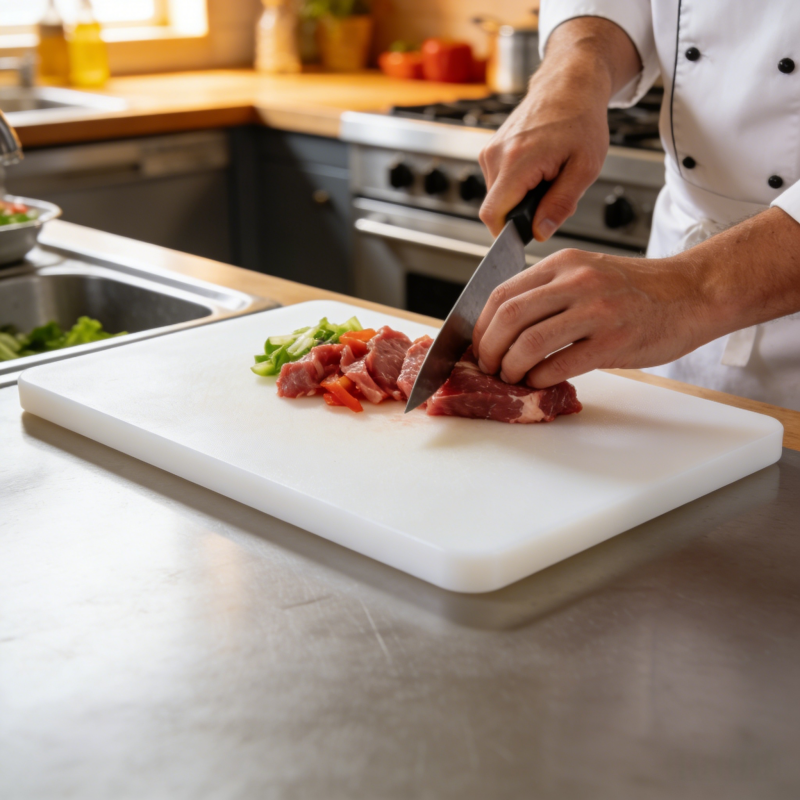
An HDPE cutting board is a cutting surface manufactured from high-density polyethylene (HDPE), a food-grade thermoplastic polymer widely used in food contact applications. HDPE is known for its toughness, chemical resistance, low moisture absorption, and hygienic properties.
Unlike porous materials that can absorb liquids and food particles, properly manufactured HDPE cutting boards feature a dense structure that resists staining and moisture penetration. This characteristic makes them particularly suitable for food preparation environments where hygiene standards are critical.
HDPE boards are commonly available in various sizes, thicknesses, and colors. They can be found in:
- Commercial restaurant kitchens
- Hotels and catering facilities
- Food processing plants
- School cafeterias
- Home kitchens
- Private-label kitchenware collections
Their versatility has transformed HDPE cutting boards from purely commercial equipment into mainstream kitchen essentials.
HDPE cutting boards are made from high-density polyethylene, a food-safe plastic valued for its durability, dishwasher compatibility, and resistance to moisture, making it one of the most widely used cutting board materials in professional kitchens.
What Does HDPE Stand For?
HDPE stands for High-Density Polyethylene.
Polyethylene is one of the world's most commonly used plastics. The term "high-density" refers to the material's molecular structure, which features tightly packed polymer chains. This structure provides enhanced strength and durability compared with lower-density polyethylene products.
HDPE is used extensively beyond kitchen applications, including:
- Milk jugs
- Food storage containers
- Water pipes
- Detergent bottles
- Industrial tanks
- Medical packaging
Because HDPE has demonstrated long-term stability in food-contact environments, regulatory agencies worldwide recognize food-grade HDPE as a safe material when manufactured according to established standards.
What Is HDPE Cutting Board Material Made Of?
HDPE cutting board material is produced by polymerizing ethylene molecules into a rigid thermoplastic resin. During manufacturing, food-grade resin pellets are melted and compressed into sheets of varying thicknesses.
These sheets can then be machined into finished cutting boards through processes such as:
- Precision cutting
- CNC routing
- Edge finishing
- Juice groove milling
- Handle creation
- Custom logo engraving
Commercial HDPE cutting board sheets are available in numerous dimensions to accommodate different applications, from small household boards to oversized butcher station surfaces.
The material itself is valued because it combines:
- Impact resistance
- Low water absorption
- Chemical stability
- Ease of fabrication
- Cost efficiency
Key Physical Properties of HDPE
| Property | HDPE Characteristics |
|---|---|
| Density | High-density thermoplastic |
| Moisture Absorption | Very low |
| Chemical Resistance | Excellent |
| Impact Strength | High |
| Dishwasher Compatibility | Generally yes |
| Food Contact Safety | Suitable when food-grade certified |
| Machinability | Excellent for custom fabrication |
Why Are HDPE Cutting Boards So Popular in Commercial Kitchens?
Commercial kitchens operate under demanding conditions. Cutting boards must endure constant chopping, repeated cleaning, rapid sanitation cycles, and strict food safety inspections.
HDPE plastic cutting boards excel in these environments because they solve many of the challenges associated with traditional cutting surfaces.
Restaurants often process hundreds of food portions daily. Staff members require cutting boards that can withstand intensive use without warping, cracking, or requiring extensive maintenance.
HDPE meets these operational demands exceptionally well.
1. Easy to Sanitize
One of the biggest advantages of HDPE cutting boards is their ease of cleaning. Their non-porous structure allows food residues to be removed efficiently through washing and sanitizing procedures.
This characteristic helps kitchens maintain hygiene standards required by health authorities.
2. Dishwasher Safe
Unlike wooden cutting boards that may warp or crack in high-temperature environments, many HDPE cutting boards can withstand commercial dishwasher cycles.
This capability saves time and reduces labor costs.
3. Cost-Effective
Commercial kitchens often need multiple boards for different food categories. HDPE provides a practical balance between performance and affordability.
Replacing boards periodically is economically feasible without sacrificing safety.
4. Color-Coded Food Safety Systems
Professional kitchens frequently use color-coded HDPE boards to prevent cross-contamination.
Common systems include:
- Red for raw meat
- Blue for seafood
- Green for vegetables
- Yellow for poultry
- White for bakery and dairy
- Brown for cooked meats
These visual systems support HACCP food safety programs and reduce human error during busy service periods.
The combination of affordability, durability, dishwasher compatibility, and HACCP-friendly color coding explains why HDPE cutting boards dominate restaurants, hotels, institutional kitchens, and food processing facilities worldwide.
Are HDPE Cutting Boards Food Safe?
Food safety remains one of the most common concerns among consumers considering HDPE cutting boards.
The short answer is yes.
Food-grade HDPE cutting boards are considered safe for direct food contact when manufactured using certified food-contact resin and produced under appropriate quality control standards.
Their widespread acceptance by commercial foodservice operations reflects decades of successful use under strict regulatory oversight.
However, not all plastic cutting boards are created equal.
Buyers should verify that products are manufactured using food-grade materials rather than industrial-grade plastics not intended for food preparation applications.
Characteristics of Food-Safe HDPE Cutting Boards
- Manufactured using food-contact approved resin
- BPA-free formulations
- Compliant with relevant regulations
- Produced under quality management systems
- Suitable for repeated cleaning and sanitizing
Food Safety Certifications to Look For
International buyers increasingly request documentation verifying compliance with food safety standards.
Reliable manufacturers should be able to provide evidence supporting regulatory compliance for their HDPE cutting board material.
| Certification | Purpose | Market |
|---|---|---|
| FDA | Food contact compliance | United States |
| LFGB | Food safety testing | Germany / EU |
| EU Food Contact Regulations | Migration requirements | European Union |
| ISO 9001 | Quality management systems | Global |
| BSCI | Social compliance | International retail |
Understanding these certifications helps both consumers and distributors source products with greater confidence.
In the next section, we'll compare HDPE cutting boards with wooden boards and PP boards, explore HDPE cutting board sheets, discuss custom manufacturing options, and explain how to choose the ideal thickness for different applications.
HDPE Cutting Board vs Wooden Cutting Board: Which Is Better?
One of the most common questions consumers ask is whether an HDPE cutting board is better than a traditional wooden cutting board. The truth is that both materials have advantages, and the best option depends on how the cutting board will be used.
Wood cutting boards have been used for centuries and are valued for their natural appearance and knife-friendly surface. HDPE plastic cutting boards, however, are preferred in commercial environments because of their superior hygiene, ease of maintenance, and affordability.
Understanding the differences between these materials helps consumers choose the right board for their cooking habits and kitchen environment.
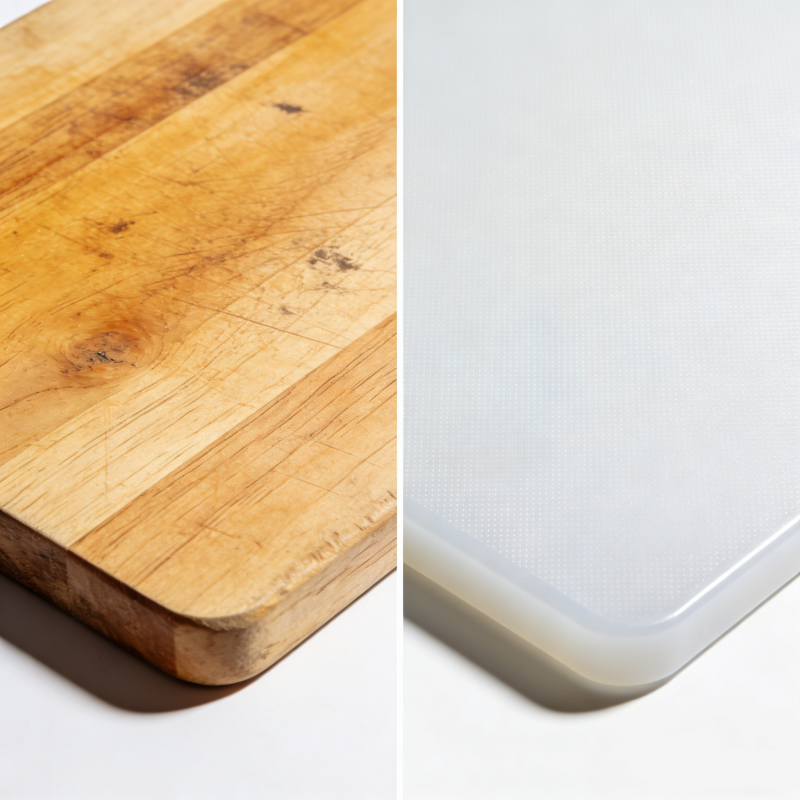
| Feature | HDPE Cutting Board | Wood Cutting Board |
|---|---|---|
| Food Safety | Excellent when sanitized properly | Excellent with proper maintenance |
| Dishwasher Safe | Yes | No |
| Maintenance | Very low | Requires oiling |
| Knife Friendliness | Good | Excellent |
| Moisture Resistance | Excellent | Moderate |
| Commercial Suitability | Excellent | Limited |
| Appearance | Functional | Premium |
| Cost | Affordable | Higher |
When HDPE Is the Better Choice
- Busy home kitchens requiring easy cleanup
- Restaurants and commercial kitchens
- Meal preparation involving raw meat
- Users prioritizing dishwasher safety
- Foodservice operations following HACCP procedures
When Wood Is the Better Choice
- Home cooks focused on knife preservation
- Serving and presentation applications
- Consumers seeking natural aesthetics
- Users willing to perform regular maintenance
HDPE cutting boards outperform wood in sanitation, convenience, and commercial durability, while wood offers superior aesthetics and slightly better knife protection.
HDPE vs PP Cutting Boards: What's the Difference?
Many consumers assume all plastic cutting boards are identical, but significant differences exist between HDPE and polypropylene (PP).
Although both are food-safe plastics commonly used in kitchenware, HDPE is generally considered the more durable option for heavy-duty food preparation.
PP cutting boards tend to be lighter and less expensive, making them popular for household use. HDPE, however, is denser and better suited for intensive commercial applications.
| Feature | HDPE | PP |
|---|---|---|
| Density | Higher | Lower |
| Impact Resistance | Excellent | Good |
| Commercial Durability | Excellent | Moderate |
| Weight | Heavier | Lighter |
| Rigidity | Higher | Moderate |
| Typical Applications | Commercial kitchens | Household kitchens |
| Price | Moderate | Lower |
For consumers seeking a board capable of enduring years of heavy chopping, HDPE often delivers better long-term value.
What Are HDPE Cutting Board Sheets?
Searches for "HDPE cutting board sheets" have increased dramatically as businesses discover their versatility.
HDPE sheets are large food-grade polyethylene panels manufactured before being machined into finished cutting boards or food preparation surfaces.
These sheets are frequently used in:
- Restaurant prep stations
- Food processing facilities
- Institutional kitchens
- Custom butcher blocks
- Marine food preparation areas
- OEM kitchenware production
Because HDPE sheets can be fabricated into virtually any size, they are ideal for commercial environments with specialized requirements.
Manufacturers commonly offer HDPE sheets in a variety of thicknesses and colors, allowing businesses to create highly customized solutions.
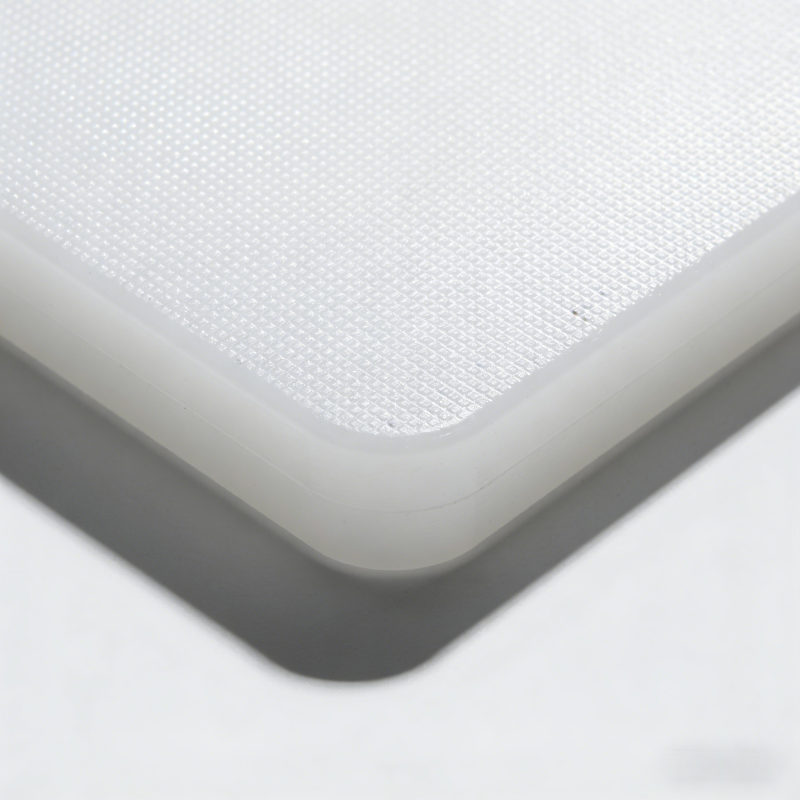
HDPE cutting board sheets provide exceptional flexibility for commercial kitchens and OEM manufacturers because they can be fabricated into custom dimensions without sacrificing durability or food safety.
Custom HDPE Cutting Boards: Why Private Label Demand Is Growing
The global kitchenware market has seen a surge in private-label development, creating increased demand for custom HDPE cutting boards.
Distributors and retailers increasingly seek differentiated products that align with their brand identity while maintaining food safety standards.
HDPE is particularly attractive for OEM production because it offers low tooling costs and extensive customization possibilities.
Popular Customization Options
- Custom sizes and thicknesses
- Private-label logos
- Laser engraving
- Color matching
- Juice grooves
- Non-slip edges
- Integrated handles
- Retail packaging design
- Barcode labeling
- Gift-ready presentation packaging
Whether serving restaurant supply distributors or online retailers, custom HDPE cutting boards provide an accessible entry point into the kitchenware market.
How Thick Should an HDPE Cutting Board Be?
Choosing the correct thickness is one of the most important purchasing decisions.
Thickness affects stability, durability, user comfort, and expected lifespan.
| Thickness | Recommended Application |
|---|---|
| 6–8 mm | Light household use |
| 10–12 mm | Daily home cooking |
| 15–20 mm | Heavy household preparation |
| 20–25 mm | Commercial kitchens |
| 25–38 mm | Food processing facilities |
| 38 mm+ | Industrial applications |
Thicker boards provide improved stability and can often be resurfaced when knife marks become excessive.
Commercial kitchens typically invest in thicker boards because of their longer service life and ability to withstand intensive daily use.
Are HDPE Cutting Boards Dishwasher Safe?
Dishwasher compatibility is one of HDPE's biggest advantages over wood.
Most food-grade HDPE cutting boards are capable of withstanding repeated dishwasher cycles without warping or splitting.
This characteristic makes them particularly attractive to:
- Busy families
- Meal prep enthusiasts
- Restaurants
- Catering businesses
- Institutional foodservice operations
Dishwasher sanitation saves time while promoting consistent cleaning practices.
Yes. Most HDPE cutting boards are dishwasher safe, making them easier to sanitize and maintain than traditional wooden cutting boards.
Do HDPE Cutting Boards Dull Knives?
Knife preservation is another major consideration among consumers evaluating different cutting board materials.
HDPE boards are generally considered reasonably knife-friendly. However, because the material is firmer than end-grain wood, some additional blade wear may occur over time.
For most users, this difference is minimal and easily addressed through routine knife sharpening.
| Board Material | Knife Friendliness |
|---|---|
| End Grain Wood | Excellent |
| Edge Grain Wood | Very Good |
| HDPE | Good |
| Bamboo | Moderate |
| Glass | Poor |
| Stone | Very Poor |
Compared with glass, marble, or ceramic surfaces, HDPE remains a far safer choice for maintaining knife sharpness.
HDPE cutting boards may dull knives slightly faster than premium end-grain wood boards, but they remain significantly gentler on blades than glass, stone, or ceramic alternatives.
In the final section of this guide, we'll explore how to clean and sanitize HDPE cutting boards, when to replace them, common mistakes to avoid, frequently asked questions, and how to choose the best HDPE cutting board for your specific needs.
How to Clean and Sanitize HDPE Cutting Boards
Proper cleaning is essential to maintain the hygiene performance of an HDPE cutting board. Although HDPE is non-porous and highly resistant to moisture, food residue and knife grooves can still accumulate over time if not cleaned correctly.
Unlike wooden cutting boards that require careful drying and oiling, HDPE boards are designed for fast and efficient sanitation in both home and commercial kitchens.
Daily Cleaning Method
- Rinse the board immediately after use to remove food particles
- Wash with warm water and mild dish soap
- Scrub using a non-abrasive sponge or brush
- Rinse thoroughly to remove detergent residue
- Air dry vertically for best hygiene results
Deep Cleaning for Commercial Use
In restaurants and food processing environments, deeper sanitation procedures are often required.
- Use food-safe sanitizing solutions
- Apply diluted chlorine-based disinfectants when appropriate
- Run through commercial dishwashers at high temperature
- Ensure full drying before reuse
Even though HDPE cutting boards are dishwasher safe, regular deep cleaning is recommended in commercial kitchens to reduce bacterial buildup in knife grooves.
Do HDPE Cutting Boards Absorb Odors or Stains?
One of the advantages of HDPE material is its resistance to absorption. Because it is non-porous, HDPE cutting boards do not easily absorb odors or liquids.
However, prolonged use with strong-smelling foods such as garlic, onions, or raw meat may still leave temporary surface odors. These can usually be removed through proper cleaning or baking soda treatment.
How to Remove Odors
- Sprinkle baking soda on the surface and scrub lightly
- Use vinegar solution for deeper deodorizing
- Rinse thoroughly and air dry
How Long Does an HDPE Cutting Board Last?
The lifespan of an HDPE cutting board depends on usage intensity, maintenance, and thickness.
In general:
- Home use: 2–5 years
- Commercial use: 6 months–3 years
- Heavy industrial use: 3–12 months (replaceable surfaces)
Because HDPE boards are relatively low-cost compared to hardwood alternatives, many commercial kitchens replace them regularly to maintain hygiene standards.
When Should You Replace an HDPE Cutting Board?
Even though HDPE cutting boards are durable, they should be replaced when certain signs appear.
- Deep grooves that trap food particles
- Excessive knife scoring on the surface
- Permanent staining or discoloration
- Warping or surface unevenness
Once deep knife grooves form, bacteria can become harder to remove even with thorough cleaning. Regular inspection and timely replacement are essential for food safety.
Common Mistakes When Using HDPE Cutting Boards
Although HDPE boards are low-maintenance, improper use can reduce their lifespan and performance.
- Using serrated knives aggressively on the same area
- Exposing boards to open flames or high direct heat
- Using abrasive steel wool for cleaning
- Storing boards while still wet
- Mixing raw and cooked food without color coding
Best HDPE Cutting Board Types for Different Users
For Home Kitchens
- Medium thickness (10–15 mm)
- Compact or medium size
- Lightweight HDPE boards
For Professional Chefs
- Thicker boards (20–25 mm)
- Large surface area
- Color-coded systems for food safety
For Butcher Shops
- Extra thick HDPE sheets
- Heavy-duty reinforced surfaces
- Juice groove designs
For Food Factories
- Industrial HDPE cutting board sheets
- Custom dimensions
- HACCP-compliant color coding
HDPE Cutting Board vs Other Materials (Quick Summary)
| Material | Best Use | Key Advantage |
|---|---|---|
| HDPE | Commercial kitchens | Hygienic & low maintenance |
| Wood | Home cooking | Knife-friendly surface |
| PP Plastic | Light household use | Lightweight & low cost |
| Bamboo | Eco-friendly kitchens | Sustainable material |
Frequently Asked Questions About HDPE Cutting Boards
Are HDPE cutting boards safe for raw meat?
Yes. HDPE cutting boards are commonly used for raw meat preparation in commercial kitchens due to their non-porous and easy-to-sanitize surface.
Can HDPE cutting boards be recycled?
Yes. HDPE is a recyclable plastic material, although recycling availability depends on local facilities.
Do HDPE cutting boards warp over time?
Compared to wood, HDPE is highly resistant to warping. However, extreme heat exposure may cause deformation.
Are HDPE cutting boards better than bamboo?
HDPE is generally more hygienic and easier to clean, while bamboo offers a more natural appearance but requires more maintenance.
Final Conclusion
HDPE cutting boards are one of the most practical and widely used food preparation surfaces in the world. Their combination of durability, hygiene, affordability, and ease of maintenance makes them ideal for both commercial kitchens and home cooking environments.
While no cutting board material is perfect for every situation, HDPE stands out as a reliable, food-safe, and cost-effective solution for modern food preparation needs.
Looking for Custom HDPE Cutting Boards for Your Brand?
We manufacture high-quality HDPE cutting boards in multiple sizes, thicknesses, and colors for global kitchenware brands. Whether you need OEM production, private label solutions, or wholesale supply, we can support your business with stable quality and fast delivery.
OEM / Custom Service
View Cutting Board Collection
Contact Us
Related Blogs