What Is a Walnut Cutting Board? Benefits, Features and Kitchen Uses
Is Walnut Good for Cutting Boards? Benefits, Durability & Kitchen Uses
Learn why walnut cutting boards are considered one of the best premium wooden cutting board options for modern kitchens.
Walnut cutting boards are widely recognized for their premium appearance, durability, and knife-friendly surface. Among various wooden cutting board materials, walnut has become one of the most popular choices for both home cooks and professional chefs.
But is walnut actually good for cutting boards? The answer is yes — walnut offers an excellent balance between hardness, durability, appearance, and cutting performance. In this guide, we will explain why walnut is commonly used for premium cutting boards, how it compares with other wood materials, and what buyers should know before choosing one.

What Is a Walnut Cutting Board?
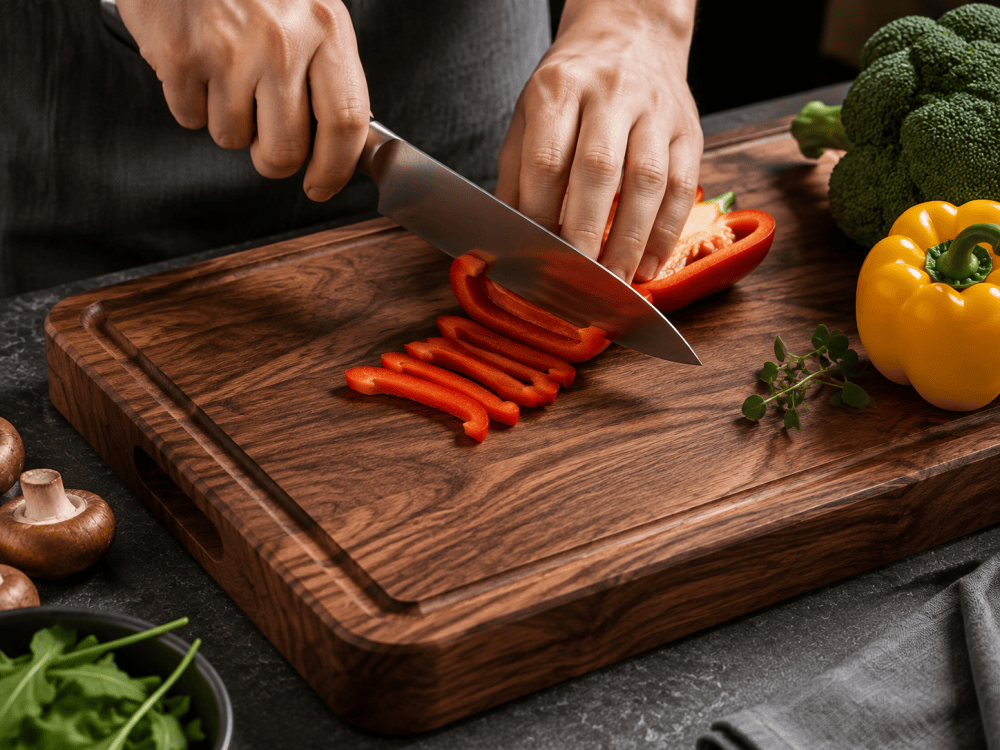
A walnut cutting board is made from walnut hardwood, typically American black walnut. Walnut wood is valued for its rich brown color, attractive grain patterns, and balanced hardness.
Unlike extremely hard woods that may dull knives quickly, walnut offers a softer cutting surface while still maintaining excellent durability. This makes walnut one of the most knife-friendly hardwoods used in kitchenware manufacturing.
Walnut cutting boards provide a smooth cutting experience while helping protect knife edges better than many harder wood materials.
Why Walnut Is Good for Cutting Boards
1. Knife-Friendly Surface
One of the biggest advantages of walnut cutting boards is their ability to protect knife sharpness. Walnut is slightly softer than maple, which reduces excessive wear on kitchen knives during daily cutting.
- Helps maintain knife sharpness
- Reduces blade damage over time
- Suitable for professional chef knives
2. Excellent Durability
Walnut is a durable hardwood capable of handling regular chopping, slicing, and food preparation tasks. High-quality walnut boards resist cracking and warping when properly maintained.
- Long product lifespan
- Stable wood structure
- Resistant to moderate daily wear
3. Premium Appearance
Walnut cutting boards are highly valued for their deep brown tones and natural wood grain. Their elegant appearance makes them popular not only for food preparation but also for serving cheese, bread, and charcuterie.
- Luxury kitchen appearance
- Natural dark wood texture
- Popular in modern kitchen design

Walnut vs Maple vs Bamboo Cutting Boards
Different wooden cutting board materials offer different performance characteristics. Walnut is often compared with maple and bamboo.
| Material | Knife Friendly | Durability | Maintenance | Appearance |
|---|---|---|---|---|
| Walnut | Very High | High | Medium | Premium Dark Wood |
| Maple | High | Very High | Medium | Light Natural Wood |
| Bamboo | Moderate | High | Low | Modern Light Finish |
Are Walnut Cutting Boards Safe?
Yes, walnut cutting boards are considered food-safe when properly manufactured and maintained. Walnut wood contains natural properties that help resist bacterial growth better than some synthetic surfaces.
However, like all wooden cutting boards, regular cleaning and proper drying are essential for maintaining hygiene.
- Wash with mild soap and warm water
- Do not soak in water for long periods
- Dry completely after cleaning
- Apply food-grade mineral oil regularly
End Grain vs Edge Grain Walnut Cutting Boards
Walnut cutting boards are commonly available in two major construction styles:
End Grain Walnut Boards
End grain boards are made by arranging wood fibers vertically. This creates a self-healing cutting surface that is highly knife-friendly and durable.
- Premium butcher block appearance
- Better knife edge protection
- Ideal for heavy chopping
Edge Grain Walnut Boards
Edge grain boards use horizontal wood strips and are more affordable while still offering excellent durability.
- Lighter weight
- Lower production cost
- Popular for daily household use

Best Uses for Walnut Cutting Boards
- Daily vegetable and fruit preparation
- Meat slicing and carving
- Cheese and charcuterie serving
- Professional kitchen environments
- Premium home kitchen setups
How to Maintain a Walnut Cutting Board
Proper maintenance greatly extends the lifespan of walnut cutting boards.
| Maintenance Task | Recommended Frequency |
|---|---|
| Hand washing | After every use |
| Complete drying | Immediately after washing |
| Mineral oil treatment | 1–2 times per month |
| Deep conditioning | Every 2–3 months |
Never place walnut cutting boards in a dishwasher. Excessive heat and prolonged moisture exposure can cause wood cracking or warping.
Why Walnut Cutting Boards Are Popular in Modern Kitchens
Modern consumers increasingly prefer kitchen tools that combine functionality with premium aesthetics. Walnut cutting boards fit perfectly into this trend because they offer:
- Professional-grade performance
- Elegant natural appearance
- Long-term durability
- Knife-friendly cutting surface
- Versatile serving functionality
As premium kitchenware demand continues growing globally, walnut cutting boards remain one of the most attractive wood cutting board categories for retailers, distributors, and OEM kitchenware brands.
Wholesale & Custom Walnut Cutting Board Solutions
Kitlucy specializes in manufacturing modern kitchenware products including cutting boards, kitchen utensils, baking tools, and OEM kitchen solutions for global distributors and private-label brands.
Explore our cutting board collection and OEM customization services for wholesale kitchenware projects.
Looking for Premium Kitchenware Solutions?
Contact Kitlucy today to explore custom cutting boards, kitchen utensils, and OEM manufacturing solutions for global kitchenware brands and distributors.
Related Blogs